Tuesday, 6 September 2016

China Leads Lithium Race: Electric Cars Sales Doubled For July To 36,000 With 207,000 EVs Already Sold In 2016.

InsideEVs.


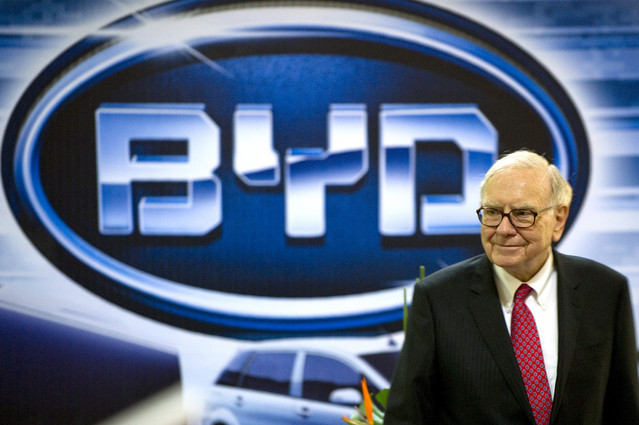
  China leads the Lithium Race with 98% increase in EVs sales y/y in July! InsideEVs reports that New Energy Vehicles sales hit 36,000 in July bringing the total for 2016 to 207,000. Warren Buffett's BYD is in the lead. Year on year EVs sales in China in 2016 have more than doubled with 123% increase so far! Battery Electric Vehicles are taking 74% of total electric cars sales in China this year.
  Now we can run some back to back comparisons for China and the US. China is moving fast increasing the gap and confirming its status of the largest electric cars market in the world one more time. We have seen the largest increase in the US in sales of EVs in August up to 66% y/y with total 14,882 electric cars sold that month. In China, we had 98% rise and 36,000 EVs sold in July. Total EVs sales in the US up to September were 93,197 and in China, we have already 207,000 by August - leading the US by 122%!     
  What is really important that EVs sales in China are totally dominated by the Chinese automakers. Now we have 25 companies which are making 51 models of electric cars in China. And ... 200 companies are  developing 4,000 new models of electric cars! Not all of them will be Teslas, but we can see what state-level military planning can do. When in the West will we see our new "Manhattan Project" aim to destroy the corruption holding us all back for years with "Clean Diesel" and "Not So Dirty Petrol" cars? Nothing is perfect anywhere and China will take a lot of titles in this field as well, but I am talking about us - when will we start thinking longer than the next turn on the road or Q results? Elon Musk has taken us very far with his own money, holding the ground of the best Lithium Technology and Electric Cars alone against all China state-level planning military machine. Now we need millions of electric cars and very fast. Who will make it? When finally Apple electric car is coming if ever? Where are all those Titans of the E-Commerce, Technology and INTERNET who are swimming in cash - searches, RTs and likes are great, but do you really need them when you cannot breathe anymore? All questions are rhetorical, nothing will change before you start it. Stop buying cancer hazard polluting ICE-age garbage, join our call "Ban Diesel UK" and spread the message.
  For those who like to connect the dots and blessed with more than 30 seconds attention span, I will provide a few links showing what is really happening in the Energy rEVolution Universe now. 


InsideEVs.


"The New Lithium Top 5": EV Race At Ludicrous Speed - 200 Companies Are Developing 4,000 Models Of Electric Cars In China.


  People are still choking up when I casually drop my line that there are 25 companies which are making 51 models of electric cars in China right now. Bloomberg is writing about another EV maker from Japan nobody-knows-about, but the real Lithium Bomb is coming with the line that around 200 companies are developing estimated 4,000 models of electric cars in China now!
  Should we all check together the lithium demand again? You can find the links below with more information about Tesla Gigafactory 1 and another dozen of Lithium Megafactories  all over the world. I was very cautiously pointing out to the 17 start-ups in China started in 2015 alone and trying to make lithium batteries before.  Bloomberg has brought us all on another page of understanding of this state-level crafted and carefully planned military operation called New Energy in China. Should we start talking about rumored 500 Lithium Batteries factories in China rising up right now?
   In our Lithium Universe, according to Robert Baylis,  Albemarle is number 1 getting 25% after its latest deal in China with Jiangli. SQM is struggling to hold 2nd place with 19%, with all its political problems.  FMC was left behind by Tianqi now with 16% claiming place number 3 and announcing the End of "Old Big 3". Ganfeng Lithium is challenging FMC as well and they both are sharing places number 4 and 5 in the "New Lithium Top 5". International lithium is building the vertically integrated lithium business with $4.5 billion giant from China. Ganfeng Lithium is a strategic partner of ILC and financing our J/V projects in Argentina and Ireland.
  Joe Lowry has pointed out that this recent move by Albemarle in China is expanding its margin, but not increasing the amount of LCE produced. I am following the comments on this chart below from Robert Baylis as well.


Robert Baylis.


Update September 5th, 2016:

Thank you, Joe, for your comments!


Warren Buffett's BYD Chasing Panasonic In Lithium Race: EV Lithium-Ion Battery Suppliers Outlook For H1 2016.


InsideEVs.


  Now we know who is feeding exactly this enormous growth of electric cars in China. InsideEVs provides very interesting data on the state of our lithium race for EVs lithium batteries market. Panasonic is still holding the number 1 place with 36% of the market, "but in terms of growth BYD is second to none moving up by more than 300%!" Now Warren Buffett's BYD claims 18% of this market. The first half of 2016 has seen an increase by 81% to nearly 8.5 GWh of lithium batteries capacity. As you can see, there is no Tesla yet on this chart at all! All lithium cells for Tesla are supplied by Panasonic. And there is no lithium under Gigafactory floor in Nevada. 
  Should we discuss the lithium demand picture again with 150 GWh of lithium batteries just coming from Tesla Gigafactory 1 by 2022 after initial 50 GWh in 2018? And what about another dozen of lithium batteries Megafactories all around the globe? 
  International Lithium strategic partner Ganfeng Lithium supplies Panasonic and BYD. Now this $4.5 billion giant from China finances International Lithium projects in Argentina and Ireland. Read more."


InsideEVs.


Lithium Market Small But Complex. Canadian Junior And Chinese Partner Taking Long View.


"Right now, Ganfeng is advancing ILC’s Mariana project in Salta province, Argentina. In July 2016, ILC and Ganfeng co-announced that a $12 million budget has been approved to accelerate exploration and development at Mariana.


ILC president Kirill Klip noted that Ganfeng has a $4.5 billion US market cap holding 19 patents for lithium products. Klip said the $12.5 million will enable ILC to firm up the size of the Mariana resource and move forward its application for a pilot production plant on the property.                                                     
“This access to capital and Ganfeng’s advanced lithium extraction technology puts  International Lithium in an exceptional position to move our project forward,” Klip said.  He cited recent discussions about ILC’s project with senior officials in the Argentinian government as evidence that the country is enthused about foreign investment in natural resource development. Read more."

Lithium 2.0 Launch: Security Of Supply - Galaxy Resources To Buy General Mining In Lithium Takeover.


  "This chart of lithium price in China is keeping awake at night very many people now in our very small industry. Quite a lot of them have totally missed the launch of Lithium 2.0 and now the security of supply is the major geopolitical issue. Tesla is still relying on Panasonic to supply lithium cells and a lot of people are relying on the "Lithium Found in Nevada" under Tesla's Gigafactory floor.
  Ganfeng Lithium: $4.5 billion giant from China is the strategic partner of International Lithium and now financing two of our J/V operations in Ireland and in Argentina. We are going where Lithium is and not just the hype around it. As we have discussed before, Lithium 2.0 is now for real as we have the real electric cars finally on the road and GM Bolt and Tesla Model 3 bring us mass market for electric cars.  Cheap lithium batteries change everything. Exponential growth in EVs sales is following by deployment of Energy Storage now.
  This Lithium M&A is pointing out another very important quality of Lithium 2.0 Launch: separation of dreams from the real people with the real projects, capital and technology to put them forward. There are only very limited number of quality lithium projects and even less capable teams with access to the capital and technology, like in the case of International Lithium and Ganfeng. Read more."


InsideEVs:


We are getting very accustomed to New Energy Vehicle sales (another way to say plug-in electric vehicles) in China doubling every month…and July was no exception.
For July 36,000 were sold, which is 98% more than year ago.
Nearly three fourths of that total again falls to all-electric vehicles (BEVs) at 26,000 sold, while plug-in hybrids (PHEVs) hit the10,000 mark for the second month in a row.
With 10,000 NEVs sold on its own (and excluding bus and trucks sales), BYD alone takes more about 30% of the market.
“According to the statistics made by CAAM, in July, the production and sales of new energy vehicles reached 38 thousand units and 36 thousand units respectively, increasing 93.4% and 98.1% year on year.
To be specific, the production and sales of BEV reached 27 thousand units and 26 thousand units, increasing 127.0% and 144.2% year on year; and such figures for PHEV were 11 thousand units and 10 thousand units, increasing 41.4% and 33.3% year on year.”
BYD plug-in electric car sales in China – July 2016
After seven months, year-to-date sales in China have hit 207,000– which is nearly 123% more than year ago at this point. We should note, that in China that total number of plug-ins includes vehicles like buses, and commercial/heavy vehicles…which we have no problem at all with adding into the count, as their “value” to society (emission/petrol displacement) is far greater than any passenger EV.
“For the first seven months, the production and sales of new energy vehicles reached 215 thousand units and 207 thousand units respectively, increasing 119.8% and 122.8% year on year. To be specific, the production and sales of BEV reached 162 thousand units and 153 thousand units, increasing 156.4% and 160.9% year on year; and such figures for PHEV were both 54 thousand units, increasing 53.7% and 57.6% year on year.”
Sales of New Energy Vehicles in China – July 2016

Monday, 5 September 2016

Lithium Race: Electric Vehicle Sales In The US Rise By 66% To 14,882 - Largest Amount Ever In August.

InsideEVs.


  InsideEVs reports about the record sales of electric cars in the US in August 2016. We are entering the exponential part of the S curve. Sales of EVs in the US rise by 66% to 14,882 - the largest amount ever.   Tesla Model S is leading the lithium race in the US with 3,125 sales. Chevy Volt is second with 2,081 and Tesla Model X is third with 1,850 cars sold! Nissan Leaf has fallen to the 5th place with 1,066 EVs sold. We can see the confirmation that people are ready to buy the best electric cars and ready to pay the premium for them like in case with Tesla Model X. Now we need the best electric cars, wich will be affordable to more people. Tesla Model 3 400,000 reservations are showing this trend. Hopefully, GM Bolt will find its buyer this Fall as well - we need now all electric cars we can get! Literally millions of them and very fast.
  Now lets put it in the perspective of China with the largest market for electric cars in the world. There we have 25 companies now selling 51 models of electric cars and 200 companies developing ... 4,000 new models of EVs! Not all of them will be Teslas, but they are getting better very fast. InsideEVs reports that total of 93,197 EVs were sold in the US by September.  We are up 29% y/y so far on top of 72,270 EVs sold last year by this time. 
  EV sales in China were up 188% in July from the last year! Total EV sales have broke 100,000 milestone with over 135,000 electric cars sold in China by the end of July 2016. As you can imagine, the center of our Lithium Universe is located now in China as well with new Chinese giants breaking into "The New Lithium Top5".


China Electric Car Sales Up 188%: Warren Buffett's BYD Dominates Lithium Race.


  I would like to share today the great report from CleanTechnica on the lithium race in China. BYD backed by Warren Buffett is the solid leader in the largest market for electric cars in the world in China. BYD has become the largest manufacturer of EVs in the world in May of this year and now is breaking out of the rest of the New Energy EVs automakers with 4 of its electric cars among the 10 best-selling  EVs in China in July.


"Klip said Tesla’s Nevada Gigafactory is generating excitement among all stakeholders in the lithium sector. But he added that “the real story of the lithium race is happening in China right now.”
“China became the largest auto market in the world for electric cars last year and (Hong Kong-based) BYD Company is now the biggest manufacturer of electric cars in the world this year,” Klip said, adding that Warren Buffett is a stakeholder.
“In China, they call battery power The New Energy, and it’s part of their current five-year plan. Twenty-five companies are making 51 models of electric cars in China already. A whole new strategic industry is being created from scratch.  Ganfeng grew from $3 million dollars in sales in 2000 to $4.5 billion in market cap now.
“Security of lithium supply becomes the most important factor for the leaders to keep their dominant position in the fast-changing marketplace."


Lithium Market Small But Complex. Canadian Junior And Chinese Partner Taking Long View.


China's New Energy Plan: Joe Lowry's Food For Thought - Lithium Hydroxide Cash Cost Comparison.


InsideEVs:

Electric Vehicle Sales In The US Rise By Largest Amount Ever In August

Against a backdrop of some admittedly fairly woeful sales comps from 2015, plug-in electric car sales shot skyward in August, as new and updated offerings found a record number of homes on US driveways.
During the month, an estimated ~14,882 were sold, up 66% from the 8,972 moved in August of 2015.

Plug-In Luxury Has A New Champion In August – The BMW 740e
We should note that the trend of setting new monthly record highs in 2016 is not a new thing, as EV sales in the US have now set new highs in every month* this year.
However, the last 3 months have seen particularly strong sales improvements – July was up 50%, while June was up 45%.
By volume, the gain of 5,910 EV sales this month over August of 2015 was the largest increase on record.
Overall, 93,197 plug-ins have been sold, which is up 29%over the 72,270 moved last year.
With the current pace of recent sales, we expect that 2016 gain to close out the year much higher yet.
Leading the way, as it often as done year, was Tesla Motors – selling around 5,000 Model S and Model X all-electric vehicles by our estimate during the month.  But we should note that August was also the first time in history that 6 different automakers delivered more than 1,000 vehicles in the same month.
The Model S was the top selling all-electric car in August with ~3,125 sales, while the Chevrolet Volt finished on top of the extended range (PHEV) vehicles, with just over 2,000 sales.  The two plug-ins have traded places several times in 2016 for the top monthly sales spot, with each being the “top dog” 4 times.
The surprise hit for August?  Has to be the BMW X5 xDrive40e (or X5 plug-in, if you will), which sold an all-time best 876 copies.  You can almost hear the US population screaming “we want more plug-in utility vehicles!”
While we still wait on “big name” offerings and upgrades to arrive this year – the Toyota Prius Prime, Hyundai IONIQ Electric (BEV), 2017 BMW i3 (94 Ah/33 kWh edition), Chrysler Pacifica Hybrid, Tesla P100DL S & X (details), the field of available EVs did expand by one in August, as the BMW 740e (details) just started to land at US dealers late in the month.

Other Statistical Points of Interest from August 2016


Dark Horse Salew Winner For August: the BMW x5 xDrive40e – (InsideEVs/Michael B)
Top Manufacturers Of Plug-In Vehicles:
  1. Tesla Motors* – 4,975
  2. GM – 2,379
  3. Ford – 2,204
  4. BMW – 2,085
  5. Nissan – 1,066
  6. VW Group – 1,056
Pure Electric Car Market Share vs PHEV In August*
  1. BEV – 7,822 -52.6%
  2. PHEV – 7,060 – 47.4%
New Year Highs Set In August By Model (previous 2016 high in brackets)
  • BMW X5 xDrive40e – 876 (655)
  • VW e-Golf – 454 (344)
  • Porsche Panamera S e-Hybrid – 59 (33)
  • Mitsubishi i-MiEV – 25 (20)

Sunday, 4 September 2016

Lithium Battery Wizards: What Is The Real Problem With Samsung Galaxy Battery?


  Samsung Galaxy recall due to the faulty batteries is making the headlines and we will read a lot about "the dangerous electric cars" in the next few weeks. I will not waste time to EVangelise those who are being paid to continue to poison us all with cancer hazard deadly emissions by ICE-age technology.  And will stop just reminding everybody that there are about 17 ICE cars catching fire every hour in the United States. 
  I will address those who is really concerned about the safety of lithium batteries. I will be the first of them as all cars will be electric very soon and we all need the best: safe and most powerful lithium batteries available ASAP.
  I will try to dig out with experts what is the real problem with Samsung Galaxy batteries.  I am not buying that it is "just a few faulty lithium cells." We have the structural problem and have to move fast to the next level of lithium technology with Lithium Solid State technologies. Only then we will be able to address the demanded high energy density with necessary safety in place.  My few questions to address:

1. Was it Samsung SDI lithium battery used in Samsung Galaxy?
2. What is the chemistry of that battery - is it Lithium Cobalt?

This could explain a big part of the trouble - from June 2015: Samsung's New Graphene Technology Will Double Life Of Your Lithium-Ion Battery

"The graphene layers anchored into the silicon surface accommodate the volume expansion of silicon via a sliding process between adjacent graphene layers," Samsung says in a paper published in the Nature journal detailing the results of its research. "When paired with a commercial lithium cobalt oxide cathode, the silicon carbide-free graphene coating allows the full cell to reach volumetric energy densities of 972 and 700 Wh l-1 at first and 200th cycle, respectively, 1.8 and times higher than those of current commercial lithium-ion batteries." 
The idea to "double pack" the amount of energy in the most volatile Lithium-Cobalt chemistry can be "the dead end" even if you use a lot of words like nano and graphene.

3. I have never used Samsung mobile phones, but "super fast charging" option with very low level of BMS ( Battery Management System) with Lithium Cobalt cell's chemistry is the sound of potential trouble.
4. Were Samsung lithium batteries involved in HP products recall as well?

  My first few observations will be that larger screens demanded by social media addicted consumers helped manufacturers of mobile devices to hide the larger lithium batteries and the big problem with lithium cobalt chemistry. It looks like Samsung was pushing the oldest lithium-ion technology used by mobile devices to the limit. "Super fast charging" is particularly detrimental to lithium cobalt batteries with very low level of basic BMS.


Argonne National Lab.

  For your information: Lithium-Cobalt batteries are mostly used by mobile communication industry, including Apple. Tesla is using Lithium NCA battery cells provided by Panasonic. And Lithium NMC battery was developed in the U.S, licensed by LG Chem and now is coming back in GM Volt and Bolt batteries. The charts above provides the initial information on different lithium chemistries. Chinese companies are mostly using Lithium-Iron Phosphate based chemistries for their batteries.
  Now Elon Musk's confirmation that Panasonic lithium cells will be used exclusively for Tesla Model 3, despite rumours of Samsung involvement, looks like "super smart" move.  Tesla and Solar City combination of growth pains do not need another blow from Oil and Auto lobby now. I do really hope that Elon Musk is already working on Lithium Solid Sate at Tesla Gigafactory and Dyson with his $1.4 billion investment in this technology  after buying Sakti3 are not just headlines. 
  And please do not forget that I am in "sweet sugar business" - please do read all my legal disclaimers. Lithium is a sugar for the Coca-Cola industry, whoever will be coming out with the best products will be using it. Why do I think so and results of my research can be found on this blog.


Bottled Electricity: Batteries - Why Lithium Will Power Us For The Next 50 Years And After That Robots.


"Increasing demand for batteries with applications in consumer electronics, electric vehicles and the grid present opportunities and challenges for rechargeable batteries. This lecture will analyse the nature of energy storage and the existing technology, and present the promising future batteries, which can have the significantly higher energy density, lower cost, better safety, and longer life. Novel battery chemistries and materials are key for a revolutionary change.

This talk was presented on March 8, 2016 as part of the MITEI Seminar Series.

About the speaker:

Yi Cui is an Associate Professor in the Department of Materials Science and Engineering at Stanford University. He received his Ph.D in Chemistry at Harvard University (2002) and his B.S. in Chemistry at the University of Science and Technology of China (1998). He was a Miller Postdoctoral Fellow at the University of California, Berkeley before joining Stanford University as an Assistant Professor in 2005. His current research is on nanomaterials design for energy and the environment and two-dimensional materials. Yi Cui is an Associate Editor of Nano Letters. He is a co-director of the Bay Area Photovoltaic Consortium of the US Department of Energy. He is a highly prolific materials scientist and has published ~310 research papers, filed more than 40 patent applications and has given ~300 plenary/keynote/invited talks. In 2014, he was ranked number 1 in Materials Science by Thomson Reuters as “The World’s Most Influential Scientific Minds.” He has received numerous awards including MRS Kavli Distinguished Lectureship in Nanoscience (2015), Resonate Award for Sustainability (2015), Inaugural Nano Energy Award (2014), Blavatnik National Award Finalist (2014), Wilson Prize (2011), the Sloan Research Fellowship (2010), KAUST Investigator Award (2008), ONR Young Investigator Award (2008), MDV Innovators Award (2007), and the Technology Review World Top Young Innovator Award (2004). He has founded Amprius Inc. (2008) to commercialise breakthrough high-energy battery technology and co-founded 4C Air Inc. (2015) to commercialise the PM2.5 filtration technology from his lab."


  Yi Cui makes another brilliant presentation about the future of the batteries. Now you can understand why I am insisting that Lithium will power us for the next fifty years and after that robots. Lithium with its lowest atomic mass and highest reactivity allows producing batteries with the highest energy density, resulting in the smallest volume and weight for the largest amount of available power and energy.
  This video is science heavy, but you will realise what it takes to commercialise the new even lithium based chemistry. It takes dozens of years and billions of dollars in R&D. Sony has commercialised lithium-ion technology in 1991 in recorders and walkmans. By 2005 lithium chemistry NCA was introduced on the commercial level for the power tools, Panasonic is still using the 10 years old technology to power Tesla. Elon Musk went for the solid existing solution on the lithium cells level and built his Tesla powertrain around it. GM has believed in lithium NMC and you have to read the book by Steve LeVine "The Powerhouse: Inside the Invention of a Battery to Save the World." to understand why Envia has never delivered NMC 2.0.
  Elon Musk has announced an incredible breakthrough, which is totally missed by the public not involved in our industry. Now Tesla can produce the all-in cost for lithium batteries at $190 per kWh! New frontiers are coming with Lithium Solid State, this technology will allow producing lithium batteries with the cost of $100 kWh and Tesla will get 500 miles range. Next will be Lithium-Air and there we can talk about cost below $100 kWh and electric cars with 1,000 miles range. I believe that Elon Musk is already working on Lithium Solid State at his Gigafactory and now Dyson has bought Sakti3 to commercialised this technology as well.


International Lithium At Wentworth 2016 Presentation.


Lithium-Air Battery Breakthrough Will Make Diesel And Petrol Cars Obsolete.


  We have The Silicon Valley economics at work. Now 3 Trillion-dollar dollar industries are investing into research and development of Lithium Technology: Mobile Communications, Electric Cars and Energy Utility Storage. This Lithium-Air Battery has been known already for quite a while. Once it is commercialised - we will have the major breakthrough in energy density for the lithium batteries. Electric Cars will be able to go for more than 1,000 miles on a charge matching the diesel and petrol ICE cars. It is not really necessary for EVs with Tesla Superchargers network mushrooming all over the world, but it will hammer the last nail into the corrupted distortion of reality created by fossil fuels and auto industries.


  And we even do not need it now to move fast forward. Next stage is LSS - Lithium Solid State Batteries like Sakti3 is developing - it was bought by Dyson this month. GM has invested in SSL with Sakti3 as well before it. I personally think that Elon Musk is working on Solid State Lithium Batteries at Tesla Gigafactory. It brings lithium battery cost down to $100 per kWh and doubles the energy density. Now lithium battery cost is around $350 per kWh at Tesla and it is going down, GM Bolt will have already $145 per kWh with LG Chem. It means that Tesla Model S 90 battery cost will be just $9k! Tesla Model 3 with 50 kWh lithium battery pack will be just $5k and range over 200 miles. Elon Musk is talking now about Models S and X with the range over 500 miles in 2 years! All it means that we are approaching very fast the mass market stage for EVs. 
  Below is the best video presentation on the batteries for the future. All your questions are answered including: Why Lithium?


   Lithium is the magic metal at the very heart of this rEVolution. Now this Green Technology metal is getting on the investors' radar screens and into the institutional portfolios. Prices for lithium are up already 16% - 17% this year, new contracts are up 15% - 20% for 2016 and Gigafactory is coming only in 2017. Joe Lowry estimates 88% increase in lithium demand in 5 years and "The industry is approaching a full-blown shortage situation" - according to him.  Read more."


Is Elon Musk Working On Solid State Lithium Batteries For Tesla Model 3 At Gigafactory?


  "I will not be surprised that we are going for another treat in our Lithium Technology space by Elon Musk! Chatting with my friends today on twitter we are getting a drift that actually Tesla can be moving into the prismatic lithium cells to be produced at Gigafactory and used in Tesla Model 3 and its other EV models. I will speculate that in this case, we are talking about Solid State Lithium Batteries. Solid Sate Lithium Technology is the new breakthrough which promises safer batteries with higher energy density. They promise higher performance, even lower memory effect and no thermal run away. Translation - batteries will be more powerful and much safer allowing you to store the larger amount of Energy in the same volume and weight! Is it the magic which allows Elon musk to go as low as $100 per kWh cost of lithium batteries to be produced at Gigafactory? I guess, that we will receive confirmation very soon now if it is the case. We have The Silicon Valley economics in action now. Quite a few companies went already bust promising the Holy Grail for Mobile Communication and Electric Cars, but GM has invested quietly in this technology and recently billionaire inventor Sir Dyson has picked up Sakti3. I bet that Elon Musk is way ahead of all of them and that is why we get from time to time his statements about the incredible range of over 500 miles coming to Tesla Electric Cars in the nearest future. Below you can find out recent news from Solid State Lithium Technology space, presentations and its description. Read more."


Lithium Fever Goes Upstream: Buying Spree Of Battery Start-Ups And Lithium Projects Expected. 


Ban Diesel UK: Lithium Race Towards Clean Air In London - Uber Unveils A Fleet Of Electric Cars.


  The word fleet sounds too much for just 50 electric cars from Nissan and BYD to be deployed by Uber on London streets with millions of cars emitting over the limits cancer hazard pollution every year. But it is the great start for promoting electric cars by the great company. High-frequency use of Uber's electric fleet will multiply the effect: more and more people will see the real alternative to ICE-age cars available today. The best effect will be to use Tesla Model S to really show how far the lithium technology and electric cars can already go to tackle the horrible air pollution in our cities. Lithium Technology is here to Ban Diesel UK! Please note, how Warren Buffett's BYD is making its way with electric cars in the West now.


Join "Ban Diesel UK" Campaign: DieselGate In Europe - How Officials Ignored Years Of Emissions Evidence.


  Our campaign "Ban Diesel UK" is gaining strength with more than 100,000 people reached across social media platforms. We need your help now. Please donate your RTs and Favs on Twitter, LinkedIn and Facebook - share and spread the message.


Join our #BanDieselUK campaign - go to this message RT and share! Spread the message, please.


"Meeting minutes, correspondence and conversation records that SPIEGEL ONLINE and the Swedish daily Svenska Dagbladet have obtained now show that the European Commission and member states knew, since 2010 at the latest, that the extremely harmful emissions from diesel cars were strikingly higher than legal levels.
But apparently none of the officials wanted the automakers to tell them why this was the case. According to EU officials, pressure from countries with a strong auto industry, most notably Germany, significantly reduced interest in an investigation. Instead of doing something about the environmental policy violation, the Commission and the member states passed the buck to each other. This undignified back-and-forth even continued after the VW scandal about manipulated diesel cars in the United States was exposed in September 2015. Spiegel. Links to the full article are below." Read more.


Lithium Race: Fully Charged - BYD e6 Electric Taxi From Warren Buffett Built In China For London.


  "BYD became the number one manufacturer of electric cars in the world this year taking over Nissan and Tesla. It is time check out what actually they are making to electrify our future and why this company is so important for the Energy rEVolution. BYD is the conglomerate from China with Warren Buffett holding a stake in it. BYD is the biggest manufacturer in the world of electric buses, they are building its own lithium batteries Megafactories in China and Brazil, its electric cars are the top-selling electric cars in China. This year BYD has launched its utility energy storage in the U.S. and now is investing in lithium mining in China to secure the supply of this strategic commodity for the Energy rEVolution. Today we have the opportunity to know more about this company and its new electric taxi for London with Fully Charged. Watch the video."


Lithium Race: World’s Top 10 Selling Plug-In Electric Cars And Top 10 Manufacturers – May 2016.


InsideEVs.


  "InsideEVs provides the latest data on electric cars sales. Tesla Model S is closing on Nissan Leaf with its 16,824 sales this year from January to May vs Leaf's 22,982. As no surprise to us, BYD is the world's top EV manufacturer with 33,209 electric cars produced vs Nissan's 24,246, with Tesla claiming the 3rd place with 21,677 EVs made. Elon Musk is aiming for 80k - 90k Teslas to be produced this year. Now let's put it into perspective with his announcement of 500,000 Teslas to be produced in 2018 and 1 million EVs by 2020! But the real story is happening in Asia right now, China has become the largest market for electric cars last year already and you can see the new names coming into the EV Top Ten Manufactures like BAIC with 10,464 in sales.  There are now 28 companies producing 51 models of electric cars in China already!  Read more."


The Telegraph:

Uber unveils a fleet of electric cars

Fully electric cars will now be available on the Uber app as the taxi firm tries to help tackle air pollution in London.
With the first battery-powered vehicles hitting the capital's roads from Wednesday, the company said more than 50 fully electric cars will be available on the app in the capital by the end of September.
Uber said it also has plans to introduce the vehicles to at least one other UK city this autumn.
Jo Bertram, regional general manager of Uber in the UK, said: "People already associate Uber with hybrid cars, but we now want to go a big step further with fully electric cars on the road from today.
"We are determined to use technology to help tackle the challenge of air pollution in London and across the UK.
"Our car-sharing service has already saved more than 1.3 million miles and 231 metric tonnes of carbon dioxide.
"With electric vehicles - and more people sharing their journey and leaving their own cars at home - there's even more we can do."
More than 60 per cent of Uber journey miles in London already take place in hybrid cars, and the car-sharing service UberPool which launched in the city last year has saved more than 98,000 litres of petrol.
The new Uber option has been been brought to the roads in partnership with car manufacturers BYD and Nissan.
A three-month study into the electric vehicles programme will be conducted by the Energy Saving Trust.
It will look at the feasibility of running large numbers of private hire vehicles in the UK, as well as the experience, driving patterns, economics and capacity of London's current network of charging points to support the cars.
And if the programme is successful, Uber expects to have hundreds of fully electric vehicles running on its app next year.
Ms Bertram added: "Of course there are challenges ahead. A bigger roll-out of fully electric cars needs a good network of charging points and the economics must add up for drivers too.
"That's why the three-month study by the Energy Saving Trust is so important.
"We look forward to seeing the results and sharing the findings with the Government, Transport for London and the Mayor."