Tuesday, 28 July 2015

Lithium Race: The Youxia X Is A New Electric Super Sedan From China "To Compete" With Tesla.


  Here we go: China is at its best in reverse engineering. Amount of money which is flying in China now with state level support of electric cars will allow even such brave experiments as trying to fight Tesla Motors with its copycats. Safety and battery performance will make all the difference here - price tag of 50% of Tesla Model S can find its own followers in China. It will be very important that cheap knock offs do not kill the healthy desire for electric cars, but hopefully regulations in China will keep up with safety in the exponentially growing market for EVs.


Lithium Race: Electric Car Sales Accelerate In Beijing.


"Xu Heyi, chairman of BAIC Group, has forecast that China will become the world's biggest electric car market in 2016, or probably this year."


  We have another catalyst to unlock the real potential of the largest auto-market in the world for electric cars. These additional benefits can bring us the tipping point for EVs in China even before Tesla Model 3 will create the mass market there. 


International Lithium and Ganfeng: China’s Lithium Battery Market to Quadruple to $8.7 Billion in 2025.


  This is where we are going: International Lithium is building the supply chain for Ganfeng Lithium and is part of this vertically integrated lithium battery business in China. Ganfeng Lithium finances J/V projects with International Lithium in Ireland and Argentina and we have the very encouraging news coming out. Western Lithium has taken out Lithium Americas with Cauchari lithium brine project and as you can see on the map below we have just a very few Salars left without ownership by major lithium player. Read more.


CarNewsChina.com:

The Youxia X is a new Electric Super Sedan from China

PUBLISHED ON JULY 27, 2015 BY TYCHO DE FEIJTER
The Youxia X is a new Electric Super Sedan from China
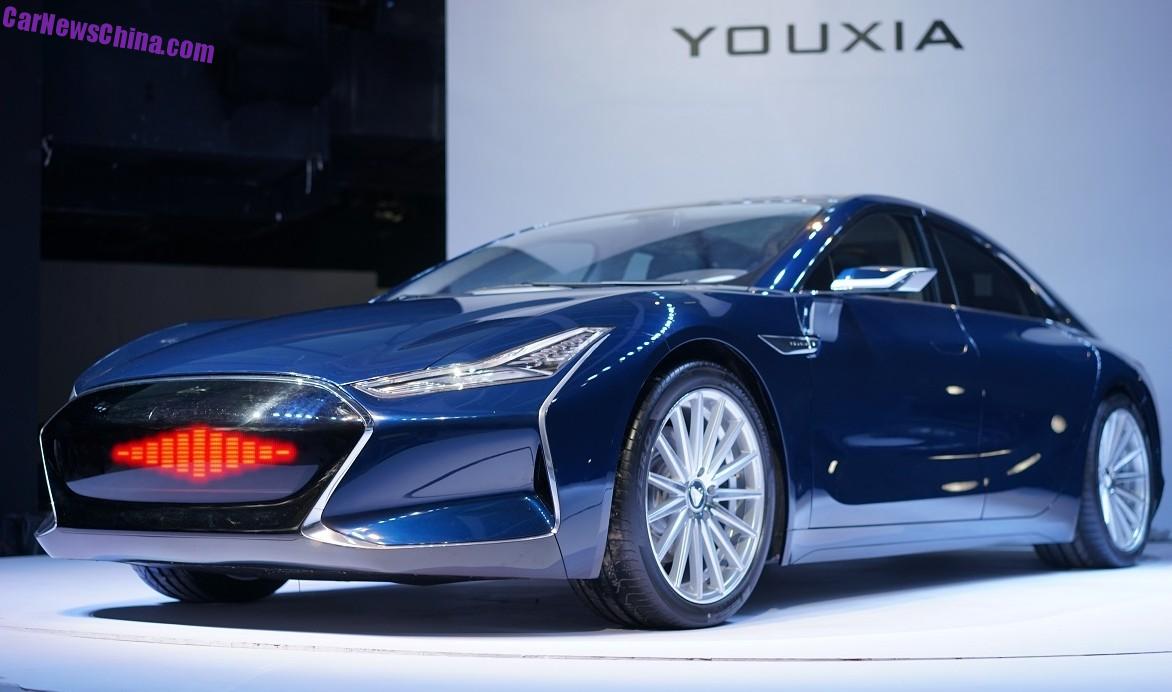
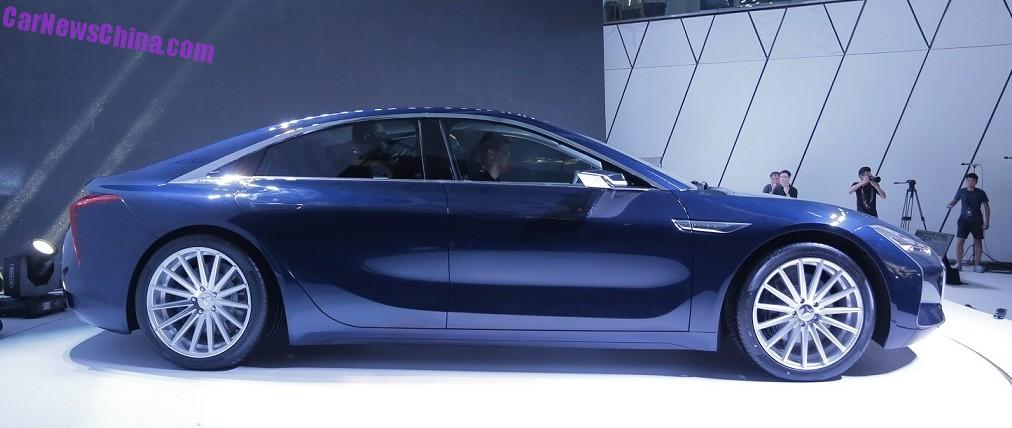
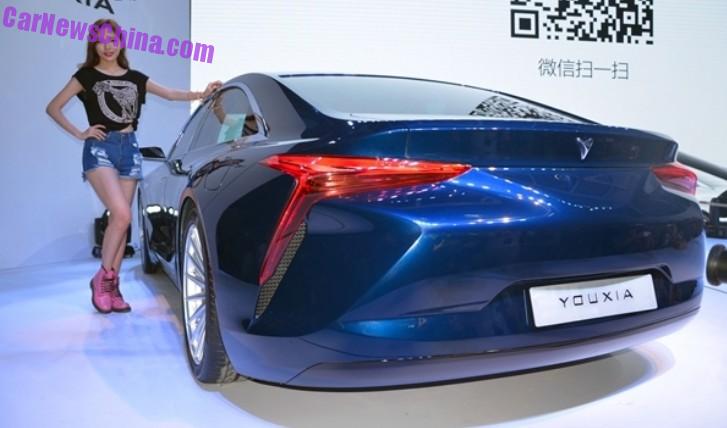
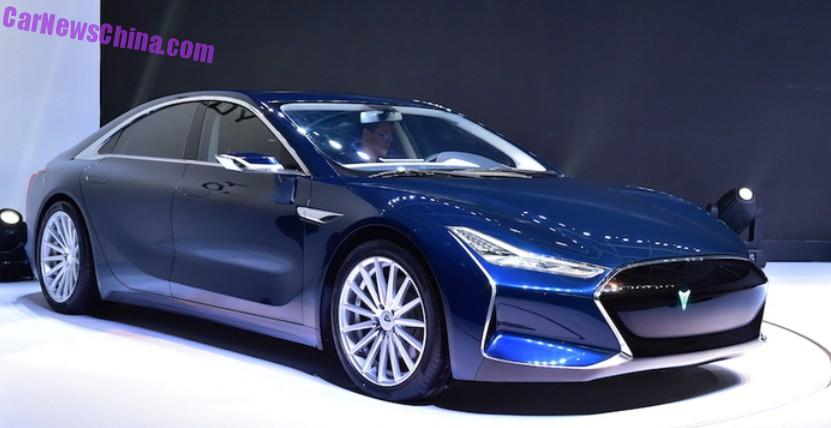
This is the incredible Youxia X electric super sedan, unveiled yesterday evening in China and set to compete against the upcoming Tesla Model 3. Power comes from an electric motor with 348hp and 440nm, and range is 460 kilometer. Production is scheduled to begin in late 2016 by a new Shanghai-based company called Youxia Motors.
youxia-x-china-2
We feel pleasantly surprised by the beauty of the car but unpleasantly screwed because we, and all Chinese automotive media, were led to believe Youxia Motors was going to unveil a sportscar called the Youxia One. But they didn’t. All references to the Youxia One have been removed from the Youxia website, except here (scroll down), and the status of the project is unclear.
But let’s forgive Youxia for now and focus on the X:
youxia-x-china-2a
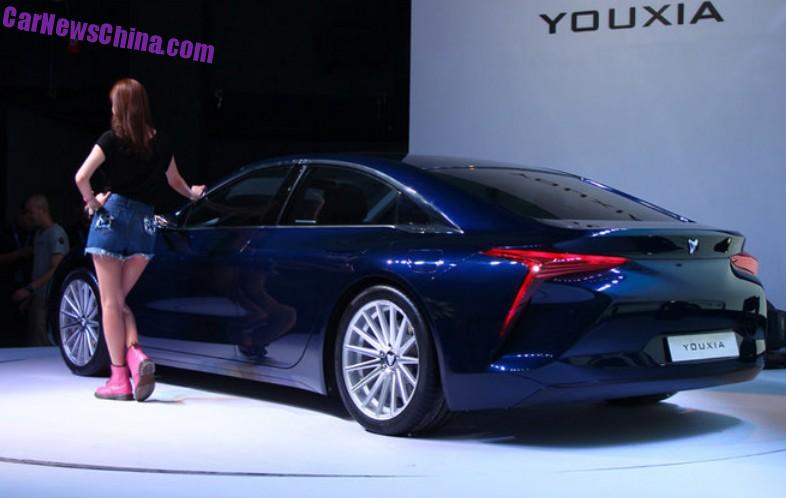
A great ass and we just love Pink shoes. As for the car; the Youxia X is by far the most beautiful vehicle we have seen coming out of China, ever and period. Rear light units are superb, and so is the subtle rear wing integrated in the boot lit. Profile is sleek and sporty, the wheels are huge and fitted with shiny silver multispoke alloys.
youxia-x-china-2b
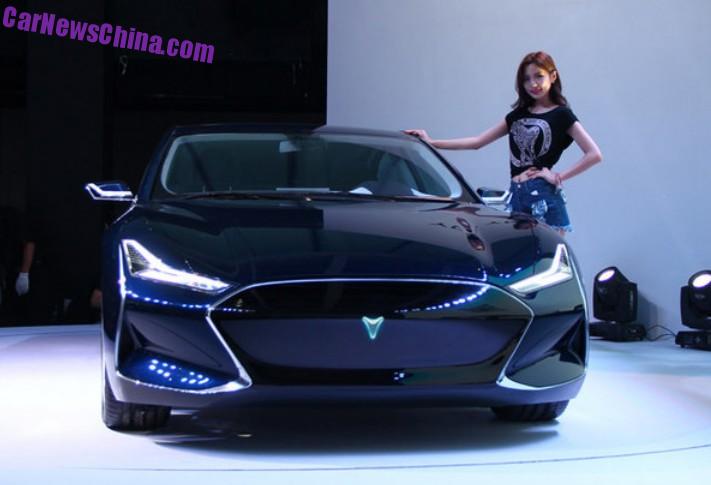
A bit of Tesla up front, but certainly not too much. The grille is a work of art, more on that below. The name of the car and company, ‘Youxia’ (游侠), comes from the Chinese name for the American ‘Knight Rider‘ television series (霹雳游侠), starring a car called KITT and a man called David Hasselhoff.
youxia-x-china-2c
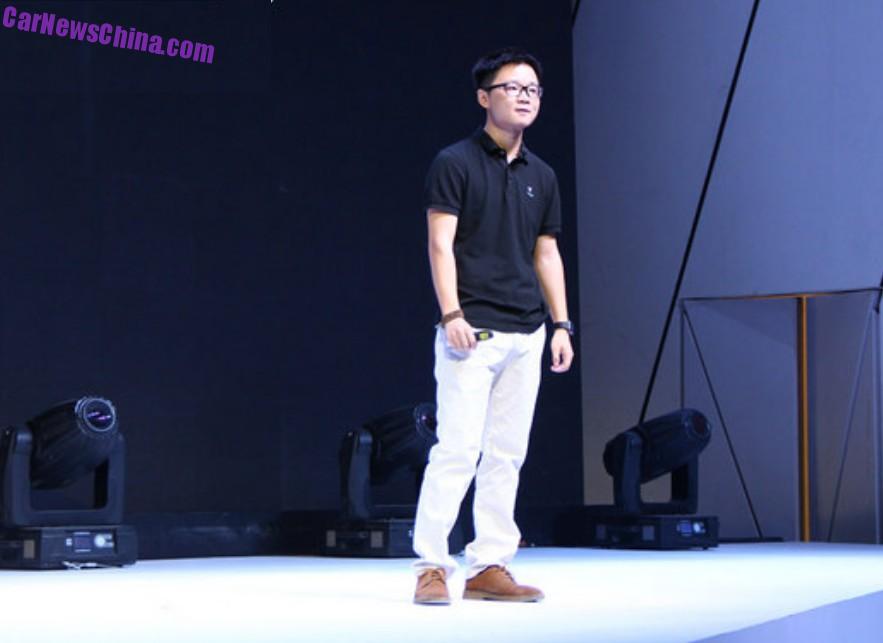
The Youxia X is the brainchild of the 28-year old (!!!) Knight Rider fan Huang Xiuyuan, who claims he first saw the X in a dream he had back in 2014. He then assembled a team of 50 engineers and designers that eventually developed the Youxia X. Production is scheduled to start in 2016 and deliveries will begin in early 2017, if everything goes according to plan.
Price will range from 200.000 to 300.000 yuan ($32.000 – 48.000). Surprisingly cheap for such a big car but the amount includes the entire 90.000 yuan green-car subsidy of the Chinese government. Youxia says this price will set up the X for competition with the upcoming Tesla Model 3.
youxia-x-china-2d
The Youxia X will be powered by an electric motor with a peak power of 348hp and 440nm, mated to a 40kWh, a 60kWh, or a 85kWh battery. 
Range with the latter is claimed to be 460 kilometer, with a 0-100 acceleration of 5.6 seconds. Range with the 60kWh stands at 330 kilometer and range with the 40kWh at 220 kilometer.
Charging of the 85kWh battery takes half an hour on a supercharger for a 270 kilometer range. No other claims on charging announced.
youxia-china-4
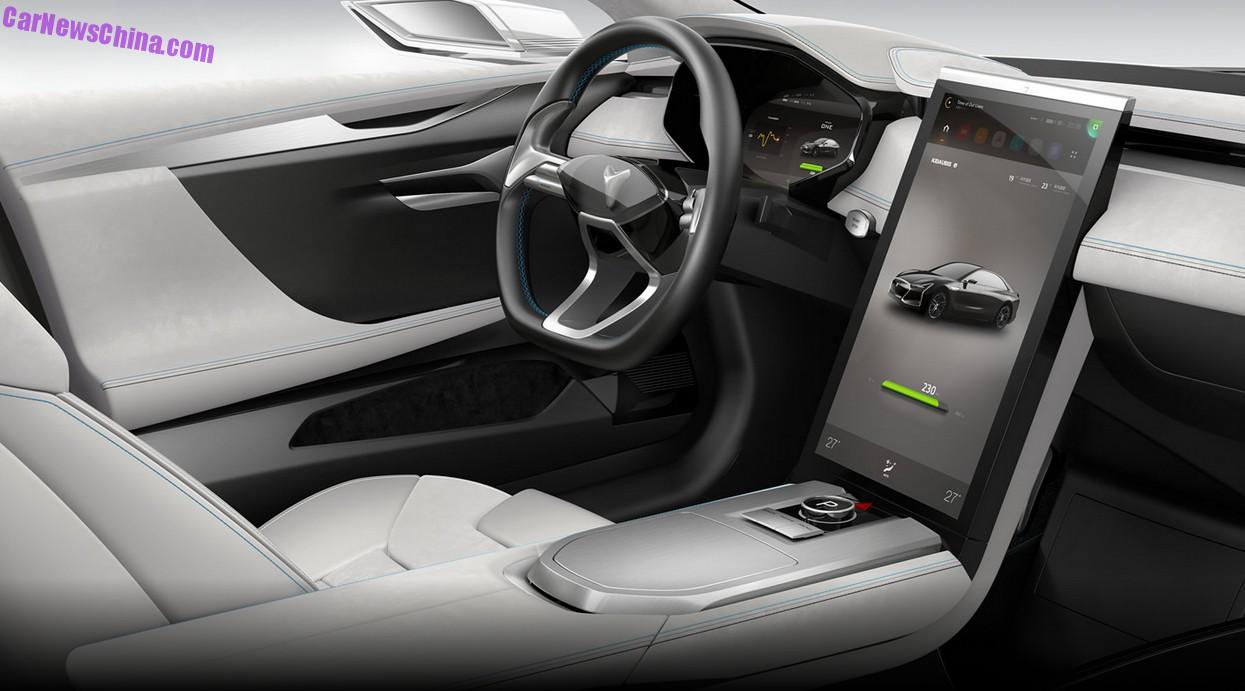
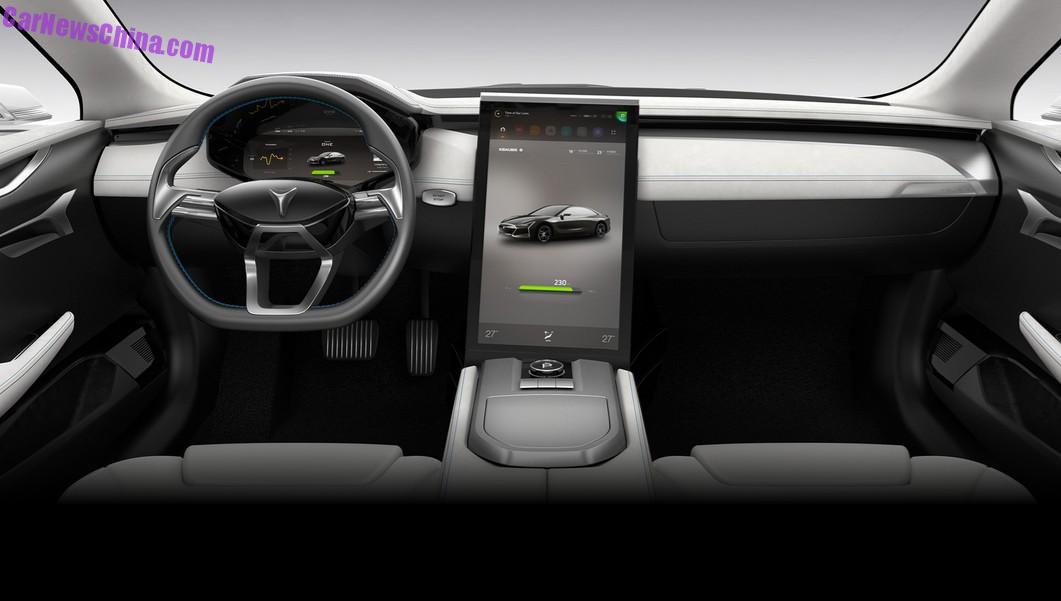
The vehicle unveiled had an interior but photos were not allowed, likely because it wasn’t completely finished yet. Happily, Youxia has a bunch of pics on its website, showing a very impressive high tech interior with an almost unbelievable 17.3 inch vertically positioned touch screen in the center console.
youxia-china-4aa
The operating system is called… no kidding… ‘KITT OS’. It is based on another operating system which is called ‘Youxia OS’, which is based on Google Android 5.0 (other company sources say 5.1). The system promises full connectivity with Android and Apple devices, including Apple Watch. It is fully inter-connected, has an in-build wifi hotspot, comes with television, and with a function allowing full remote control of the vehicle, similar to the BYD Su Rui.
youxia-x-china-1z
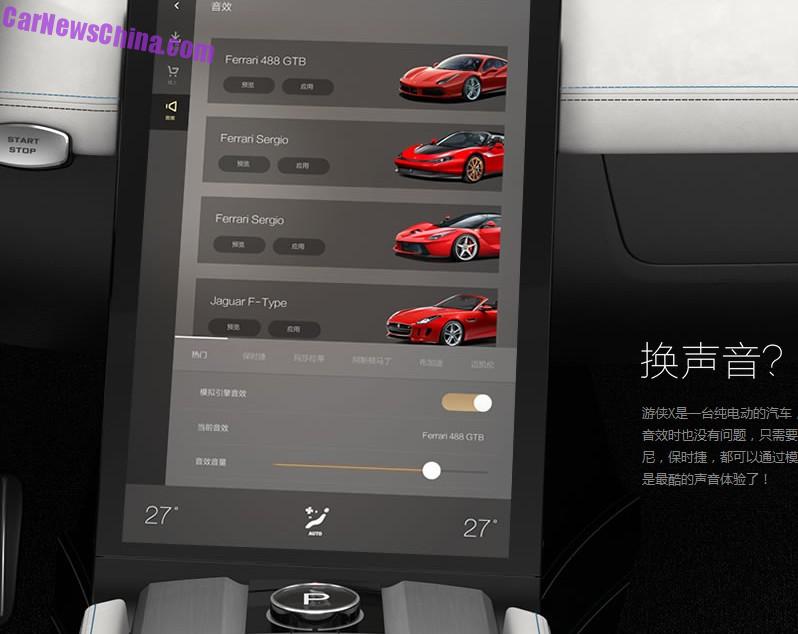
The system can pipe the sound of your favorite car into the cabin for that racy electric feeling. The list includes the brand new Ferrari 488 GTB, the ultra-rare Ferrari Sergio, the Ferrari LaFerrari dubbed the Ferrari Sergio, and the Jaguar F-Type. No Tesla Model S..?
youxia-x-china-3
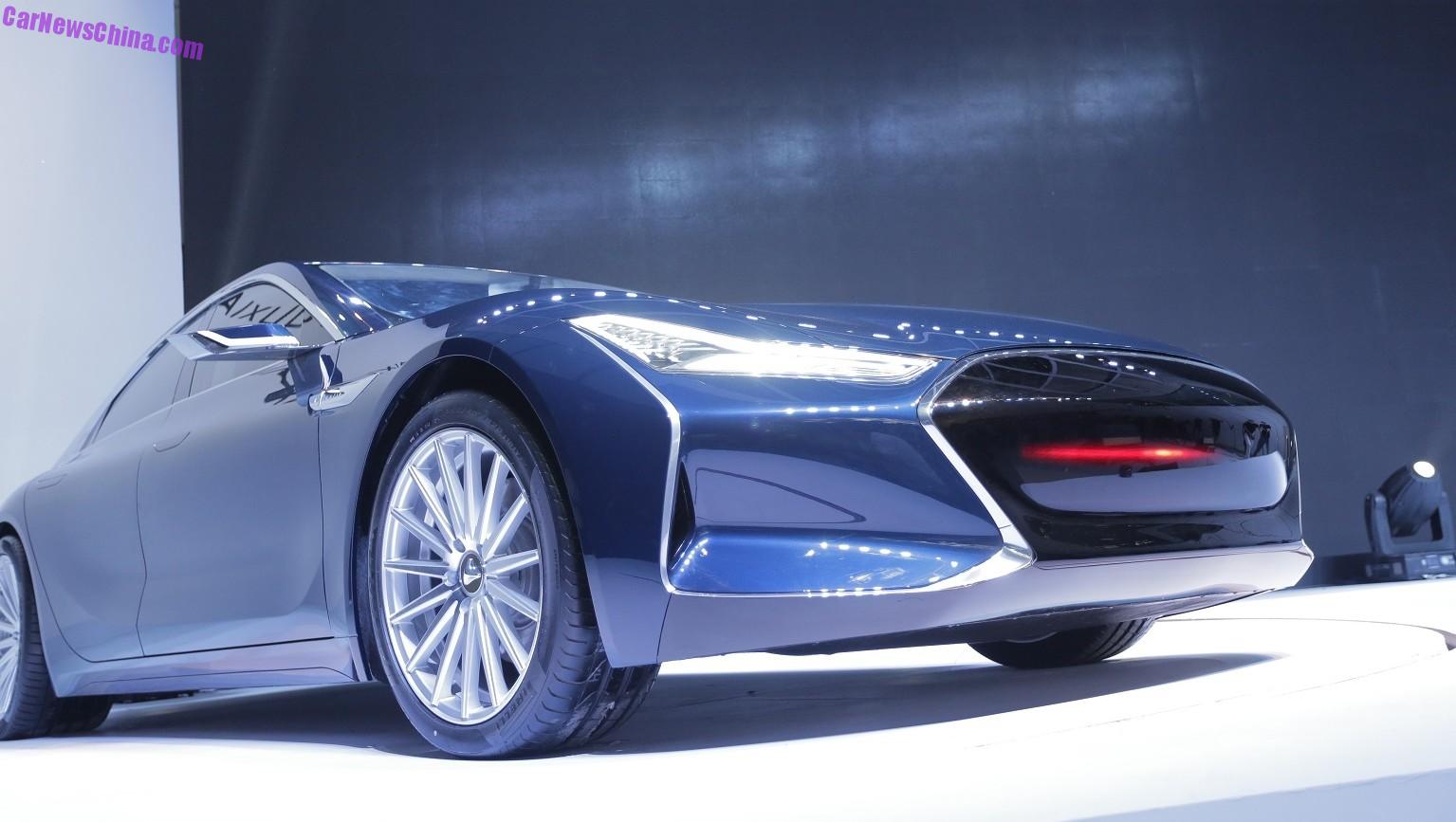
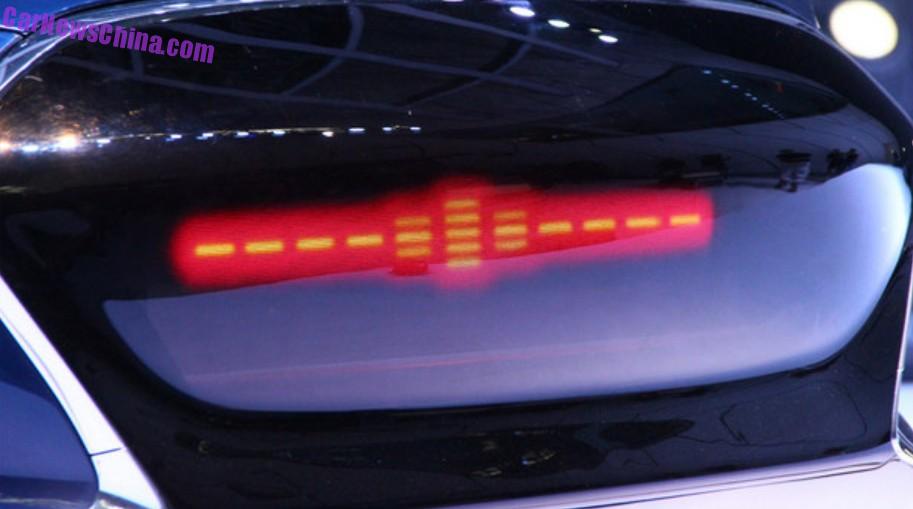
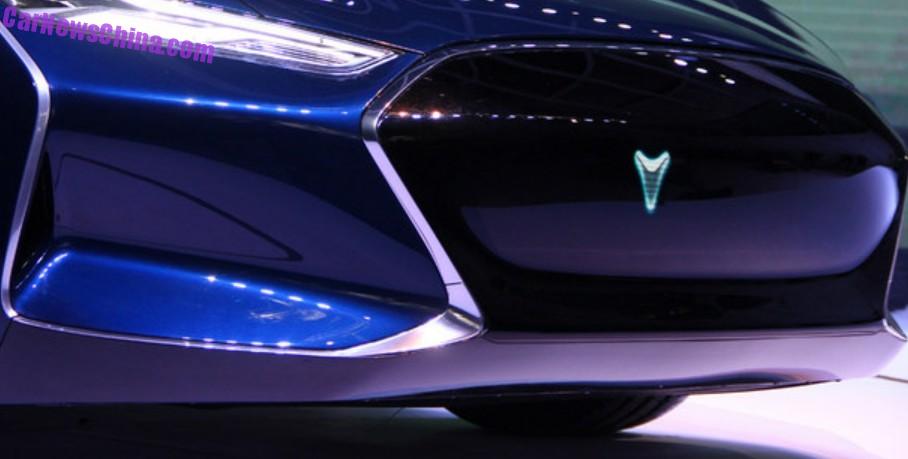
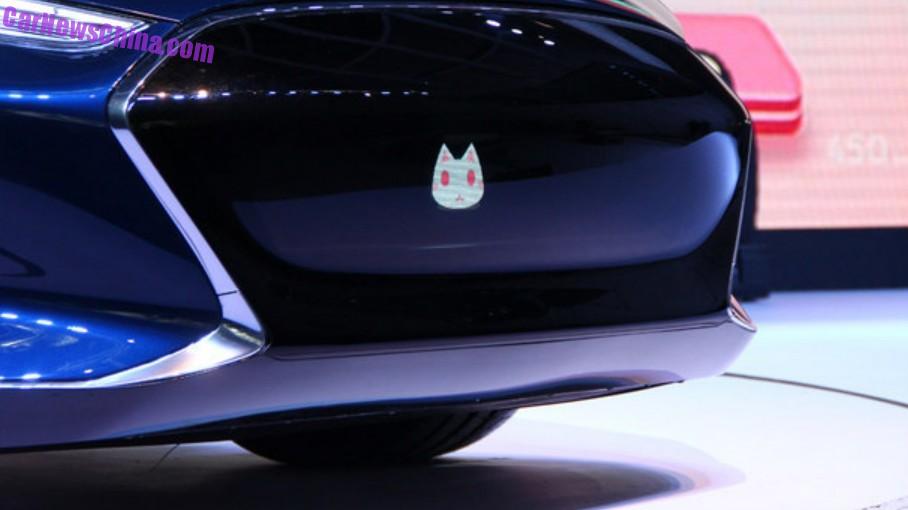
The eye catching grille is actually a holographic display, inspired by the Knight Industries KIT 2000 and 3000, the vehicle used in the Knight Rider television show. The screen can display the typical KITT red running lights, or the Youxia logo, or anything else you might like.
youxia-x-china-4
KITT.
youxia-x-china-5
The Youxia logo.
youxia-x-china-6
A cat’s head.
youxia-x-china-7
We are truly impressed by the Youxia X and by the plans the company has for the future. They seem well-funded and obviously employ talented designers and developers. However, taking the vehicle to production will cost a lot of money and effort more, much more indeed than a mere 50 men can handle.
But so far so very good, and we will closely follow the company’s progress. Now, what about that One..?"

Warren Buffett's Midas Touch: BYD Qin Becoming Best Selling Plug-In Electric Car Worldwide.


  InsideEVs reports very interesting development with BYD Qin Plug-In sales. Looks like Warren Buffett has his Midas touch even in technology sector. China is at the tipping point now for mass market for electric cars and the best ones are only coming! You can find more information about Warren Buffett, BYD and mass market developments for EVs in China on my blog.


Lithium Race: Electric Car Sales Accelerate In Beijing.


"Xu Heyi, chairman of BAIC Group, has forecast that China will become the world's biggest electric car market in 2016, or probably this year."


  We have another catalyst to unlock the real potential of the largest auto-market in the world for electric cars. These additional benefits can bring us the tipping point for EVs in China even before Tesla Model 3 will create the mass market there. 


International Lithium and Ganfeng: China’s Lithium Battery Market to Quadruple to $8.7 Billion in 2025.


  This is where we are going: International Lithium is building the supply chain for Ganfeng Lithium and is part of this vertically integrated lithium battery business in China. Ganfeng Lithium finances J/V projects with International Lithium in Ireland and Argentina and we have the very encouraging news coming out. Western Lithium has taken out Lithium Americas with Cauchari lithium brine project and as you can see on the map below we have just a very few Salars left without ownership by major lithium player. Read more.


International Lithium Corp. Updates on Drilling Programs in Argentina and Ireland.


  We have great news today from our both J/V projects with Ganfeng Lithium! You already know about my personal vision for the lithium industry and our strategic partnership between International Lithium and Ganfeng Lithium from China. Now we have results coming in from our exploration and development programs.


InsideEVs:


"BYD Qin plug-in hybrid was at the end of May the fourth best selling plug-in model worldwide, according to the EV Sales Blog.
But the sales surge this year is so strong that by the end of this year Qin could be #1.
After less than 2,000 sales a month in February, BYD moved around 2,500 in March and April, over 3,500 in May and now over 4,000 in June!
4,015 to be exact, bringing the total sales counter to 16,477 YTD and 31,224 since December 2013. All those numbers concern China (there are probably some low volume sales outside of China, but we don’t have any solid sources for those figures).
Up to date, BYD was increasing pace of deliveries every single month, so we could see 5,000+ soon.
BYD is selling the all-electric e6 mainly to fleets – 505 in June and 2,900 YTD through the end of June.
From August on, our eyes will be directed to another BYD plug-in hybrid: Tang rollout (from early July). In June BYD registered first 412 (probably dealers).
Well, we are not sure yet but the world’s largest automotive market could open the doors for Chinese brands to be world leader in terms of New Energy Vehicles (pure electric and plug-in hybrids) sales. They already did that with electric buses."

Lithium Race: Electric Car Sales Accelerate In Beijing.


  China's plan to develop the new strategic industry: electric cars, is moving fast in all directions. These steps include securing supply of lithium through J/V agreements like Ganfeng Lithium and International Lithium; getting access to latest EV technology through J/Vs with BMW, Mercedes, WV and others; building charging infrastructure with Tesla, ABB and state level plan for wiring requirements to be incorporated in new residential and commercial developments in China. When "War on Pollution" meets with latest Lithium technology and largest auto-market in the world you can expect a lot of sparks to ignite this huge market for EVs! And now it is almost for certain that Apple electric iCar is coming …

Lithium Race: China Builds 25,000 Electric Cars, Plug-In Hybrids In June Alone.


  We have another confirmation of the explosive growth for electric cars in China and the best ones are only coming!


Lithium Race: Tesla to Sell Model X SUVs in China in First Half of 2016.


  What will happen if we take "the best SUV on the market", largest auto-market in the world and "War On Pollution"? I guess it will be a very good chemistry. Elon Musk is leading assault on 4 trillion transportation industry and China is the place where it really matters: Tesla model S and X will pave the way for mass market Tesla Model 3. Now lets check the lithium supply headlines … 
  Chinese lithium industry is getting ready for this coming tide. Ganfeng Lithium is working on security of supply and making deals to get access to the strategic commodity. Ganfeng holds strategic stake in International Lithium and finances the development of our two J/V projects in Ireland and Argentina.

International Lithium and Ganfeng: China’s Lithium Battery Market to Quadruple to $8.7 Billion in 2025.


  This is where we are going: International Lithium is building the supply chain for Ganfeng Lithium and is part of this vertically integrated lithium battery business in China. Ganfeng Lithium finances J/V projects with International Lithium in Ireland and Argentina and we have the very encouraging news coming out. Western Lithium has taken out Lithium Americas with Cauchari lithium brine project and as you can see on the map below we have just a very few Salars left without ownership by major lithium player.


International Lithium Mariana J/V With Ganfeng: Orocobre Olaroz Lithium Update.


  We are following very closely the development at Olaroz by Orocobre. Today company is reporting very encouraging news on its production update and the market conditions. International Lithium and Ganfeng Lithium J/V operations on Mariana are moving towards pilot plant stage and we are very encouraged with our initial results.


Mr Li Chairman of Ganfeng Lithium and Mr Klip President of International Lithium.


English.news.cn:

Electric car sales accelerate in Beijing

"BEIJING, July 27 (Xinhua) -- A growing number of electric cars are running on the streets of Beijing as the Chinese capital battles air pollution that is partly caused by vehicle emissions.

BAIC BJEV, which has a 66-percent of the electric vehicle market in Beijing, sold 6,223 electric cars in the first half of 2015. The company shifted 5,510 electric cars in the whole of last year.

The government has made electric cars more appealing by offering subsidies. In the lotteries through which many Chinese cities allocate number plates, drivers also have a far better chance of getting a plate for an electric car than for a regular vehicle.

One major electric vehicle store said customers need to wait a month after down payment to get the popular EV200 model.

Tesla, which already has 10 stores in China, told Xinhua it would open at least one more before the end of this year.

Regulators and carmakers are also pushing to build more charging stations for electric cars. BAIC is planning to build charging stations in SINOPEC petrol stations in Beijing. The charging process should take about three minutes, it said.

Xu Heyi, chairman of BAIC Group, has forecast that China will become the world's biggest electric car market in 2016, or probably this year."


Monday, 27 July 2015

McEwen Mining And TNR Gold: Scioli Emphasizes Pro-mining Approach In San Juan Province, Argentina.


  Finally, we have the great news from Argentina for TNR Gold and International Lithium. The front-runner in the presidential elections in Argentina Daniel Scioli has raised his support for the mining industry in Argentina. Particularly encouraging his remarks on the foreign investments:

"He would “go out to the world” to attract the necessary investments. He argued that he wished to make it clear to employers and future investors that “they will find in Argentina a land of opportunity”. 

  The sleeping giant Los Azules copper is located in San Juan province in Argentina, now project will be getting on industry radar screens with elections fast approaching in October this year. Stabilising situation in China will bring support for the copper prices. 


Los Azules Copper: McEwen Mining and TNR Gold - Copper Prices Could Turn Red Hot Thanks To Alternative Energy.


  Business Insider is making the blast of brilliant Frank Holmes article on copper and alternative energy catalyst. We are talking about it here for a while and now it is time for mainstream investors to have a look at the looming copper supply crunch. Los Azules copper project is very well positioned now to participate in this mega trend.


McEwen Mining And TNR Gold: Los Azules Copper - The Looming Copper Supply Crunch.


 Visual Capitalist provides brilliant infographic on copper supply problem. The catalyst for the market is coming with the huge boom in Solar Energy and roll out of electric cars. 


  With elections coming this fall in Argentina it is time to revisit the potential of Los Azules Copper. This giant copper project in Argentina is under management of McEwen Mining and TNR Gold holds 0.4% NSR and 1% on sale of the project. All three major candidates have announced their support for the mining industry in Argentina. According to Rob McEwen, this winter number of interested parties were visiting Los Azules. Project is for sale and it is only the question of time now when it happens. We are approaching the anniversary of Taca Taca sale by Lumina Copper, which Rob McEwen is using as the benchmark for Los Azules value. On the links below you can find more information about Los Azules and TNR Gold assets in this project. Please carefully read my legal disclaimer, all technical data provided by McEwen Mining is for information only, you should not be relying on it to make any investment decisions. "Qualified Person"  of TNR Gold as defined under NI 43-101 was not able to verify all these information. Read more.


  "Copper and Lithium become the strategic metals for the ongoing green revolution. Solar and Wind Energy and Electric Cars will drive the new demand for these metals. Solar Energy is growing very fast all over the world now. Energy Storage will be the next step to ignite this growth. This is the new focus of Elon Musk and his Gigafactory. He will introduce the home storage system based on the lithium batteries in the next few months. Copper will have its special place in this mass scale roll out of distributed energy generation systems with Wind and Solar Power. Integral part of this system - Energy Storage is getting popular now with Elon Musk Gigafactory and Warren Buffet with BYD making the headlines. These Trillion Dollar industries: Electric Cars and Energy Storage will drive the demand for Copper and Lithium in the future. Read more."


McEwen Mining:

Scioli emphasizes pro-mining approach during seminar in San Juan Province

"As we anticipated (see Bi-Monthly Mining Report of July 10), Buenos Aires Governor Daniel Scioli vocalized his strong support for “sustainable mining” at a seminar in San Juan Province on Friday July 17. In fact, at the event, Scioli went even further than expected in emphasizing the industry's economic benefits and statements regarding his plans if elected. 
To begin with, Scioli highlighted the importance of mining to Argentina’s economy, both at present and in the future. Alongside his vice presidential running mate, Legal and Technical Secretary Zannini, Scioli said “mining has the capacity to generate USD 30 billion in the next four years and hundreds of jobs”. Similar to previous statements, he argued that sustainable mining is part of the national development agenda and “a cornerstone, like energy sovereignty, agribusiness, science, technology and tourism”. He argued that if elected, his administration would aim to strengthen the industry’s productivity and competitiveness. In doing so, Scioli emphasized that his government would seek to replicate the experience in San Juan, where Governor José Luis Gioja has managed to successfully balance the interests of various stakeholders, including companies, workers, local communities, indigenous populations and environmental groups.
In addition, the presidential front-runner made two important points about how his administration would help drive the industry's growth. Firstly, Scioli stated that he would not simply wait for foreign investors to take an interest in Argentina's mining industry. Instead, he would “go out to the world” to attract the necessary investments. He argued that he wished to make it clear to employers and future investors that “they will find in Argentina a land of opportunity”. Secondly, Scioli underlined the importance of a federal approach to mining, arguing that he would support and strengthen the “productive federalism" of the provinces. This latter point was later echoed by one of the Argentine Development foundation's (DAR) experts on mining and Secretary of the Latin Mining Organization (OLAMI), Hugo Nielson. Following the seminar, Nielson said that Scioli would like to work towards creating a more unified (and supportive) approach to mining in Argentina. Nielson revealed that if elected, Scioli would aim to sign a new federal agreement on mining with all of the provinces, emphasizing that his administration would consider the individual circumstances of each jurisdiction.
The event has been widely reported in the Argentine press and was well-attended – including by mining companies, service providers, unions and representatives from most provinces – in a large part due to Gioja's influence. Although originally designed by Nielson as a gathering to discuss technical issues, the seminar quickly developed into a political event. Gioja, a close friend of Scioli, suggested that the seminar be proceeded by a gathering of the Federal Association of Mining Provinces (OFEMI). Following the meeting, Scioli announced that Buenos Aires Province would be joining the organization (as will Tierra del Fuego). In addition, the morning of the seminar, both Argentina's mining chamber (CAEM) and a group of service suppliers released communiqués that were highly critical of the current administration's approach to mining, particularly that of federal Mining Secretary Jorge Mayoral. As a result, according to our sources, Mayoral was asked to refrain from speaking at the event. 
Cefeidas Group"


Sunday, 26 July 2015

TTIP, TTP And NWO Vs China And Gold - Cutting To The Chase Of Geopolitical Sleepwalking With Velina Tchakarova.


  It can be heavy for Sunday morning, but I will throw few more here: AIIB, China with SDR and OECD. GMOs have produced great audience for the evening talk shows and FB time line, but some bright people are still connecting the dots. I will put my angle on this brilliant piece from Velina Tchakarova. Why China buys Gold and what is really happening with the world now? If it is a newly found FED printed prosperity than why do we have constant wars from Ukraine to Syria, ISIS, Iraq, Armenia, Azerbaijan - just to name a few? I guess it is the same old War For Resources, hopefully it will stay Cold and Currency Wars are just part of this master plan. NWO is coming, but maybe it will not be the same as hoped by some and these people are very angry and loosing their cool over it - welcome to the new brave world, which is just trying to get off The Oil Needle.


Tony Seba: Clean Disruption - 100% Electric Cars And 100% Solar Energy By 2030.


FED's Mission Impossible: "Gold Is Dead And Nobody Loves It Any More."


Emerging Equity:

Geopolitical Sleepwalking: The System’s Bipolarity Everyone Is Currently Overlooking


By Velina Tchakarova

"We seem to be on the verge of a global system transformation, be it in the field of economy, finance, markets, institutions or international relations. Everyone is asking the same question: “What is going on right now?” To put it simply, as Seinfeld once said: “The whole system is breaking down!” The system’s transformation is shaking the fundamentals of the only remaining geopolitical bloc of the Trans-Atlantic community, still being based on alliances, partnerships, institutions and organisations that have continued existing since the end of the Cold War. As it seems presently, major geopolitical changes are about to happen. Not only will the Trans-Atlantic community seek to preserve its dominance in global affairs but also an emerging China-led bloc, aimed at establishing alternative structures, institutions and alliances, will start challenging its dominance. Therefore, it is of utmost importance to figure out the geopolitical dynamics as well as the systematic character of current developments in order to analyse their long-term impact and to draw correct conclusions for the future.
It should be pointed out that the process of the system transformation has already become irreversible, and thus its final destination – most likely too. No matter how long it will take, whether the next 15 or 50 years, we will end up with a new bipolar world order. Hence, it is very dangerous to neglect the emerging system’s bipolarity. Understanding intertwined complex structures and processes demands notably a system approach and therefore strategic thinking is required. In particular, with a view to the vastly changing geopolitical environment, where diverse actors are currently pursuing conflicting goals and agendas.
The most irritating issue here is that distinguished decision-makers, experts and scholars have mainly misunderstood the global system transformation. Their widespread assumption is that the world has moved away from a US-led unipolar system while entering a phase of multipolarity. The main argument, put forward by various notable actors of the international community in support of multipolarity, is that no single nation can tackle current economic, financial, trade, security or military issues on its own, and thus all nations are currently interdependent in terms of global interactions. Just to give a few examples, the IMF’s managing director Christine Lagarde has announced the emergence of a “new multilateralism” (link https://www.imf.org/external/np/speeches/2014/020314.htm). Moreover, the EU has been stressing since the launch of its European Security Strategy (2003) the importance of an “effective multilateralism” as well (link http://www.consilium.europa.eu/uedocs/cmsUpload/78367.pdf). Furthermore, Obama has recently outlined the US doctrine of multilateralism in his foreign policy speech (https://www.whitehouse.gov/the-press-office/2014/05/28/remarks-president-united-states-military-academy-commencement-ceremony). Finally yet importantly, Russia’s president Vladimir Putin has signed an executive order back in 2012, which points out “a multiple-vector approach in forming a new, polycentric system of international relations”. (link http://en.kremlin.ru/events/president/news/15256#sel=1:29,1:40).
Why Did They All Get it Wrong?
While there can be no doubt that multilateralism is intensively evolving, it is to be found at the so-called Meta level, which exists between the system level and the level of states, and thus it is the level, where various regional actors are participating in concurring regional integration projects. If one looks at the painting Circles in a Circle by Kandinsky, one can clearly recognize the state level as the various circles within the big circle, which is the system of international relations, while the crossing lines constitute the Meta level of interaction. (1923, link: http://upload.wikimedia.org/wikipedia/commons/f/f0/Vassily_Kandinsky,_1923_-_Circles_in_a_Circle.jpg)
Just to give a few examples of the so-called multilateralism at Meta level, China and the US have already launched regional economic integration projects in Asia – such as the Regional Comprehensive Economic Partnership (RCEP) respectively the Trans-Pacific Partnership (TTP). Furthermore, the US and the European Union are currently negotiating on Transatlantic Trade and Investment Partnership (TTIP), while Russia is being focused on its regional integration project called the Eurasian Economic Union (EEU), which is aimed at integrating the countries in the near abroad. Moreover, the EU has also decided to expand its influence through an association with three Eastern European neighbours (Moldova, Ukraine and Georgia). Consequently, the multilateral interactions of the actors at the Meta level have created the wrong impression that the global system has been heading towards multipolarity, where each participant has a saying in global affairs. However, I argue that there is already an emerging system’s bipolarity everyone is simply overlooking. In fact, we are moving slowly but steadily towards a bipolar confrontation between an US-led transatlantic bloc and an emerging new China-led bloc, whereas all major regional powers will have to align with the one or another bloc at some point in the future.
Why the System’s Bipolarity Instead of Multilateralism? 
If we look at polarity as a natural state of the system, duality seems to be the most stable form. A bipolar system has two poles, which are most likely a pair of opposites such as the magnetic forces. Magnets actually do not just attract and repel each other but they also can impart a twisting moment on each other, depending on their position. Hence, the emerging system’s bipolarity can be seen as a future dual relationship between the two system powers – the US and China. There are many indications that China is already reflecting on its future role in a new geopolitical context in order to come up with a comprehensive policy covering all issues of economy, trade, currency, gold, new international institutions, military and defence as well as new alliances and partnerships.
One of the main arguments in support of China as an emerging second pole in the system of the international relations refers to economy. The projected growth in GDP by 2030 clearly points to almost equally large economies of US and China according to the US Department of Agriculture, meaning that there will be two system powers in terms of their share of the global economy. (link: http://www.bloomberg.com/news/articles/2015-04-10/the-world-s-20-largest-economies-in-2030).
World's Largest  Economies in 2030
Moreover, an OECD report on the GDP projection by 2060 claims that not only China but also India will exceed the US economy. Also, the combined economic output of both economies will exceed the one of all G7 countries by around 2025 as well as the whole OECD bloc by 2060 (link: http://www.oecd.org/eco/outlook/2060%20policy%20paper%20FINAL.pdf p. 22).
Another OECD report from 2014 further confirms that the “composition of global output will continue to shift towards emerging economies as well as towards Asia; the combined GDP of China and India was 33% of that of the OECD in 2010 (on a PPP basis), but is expected to rise to 73% by 2060” (http://www.oecd.org/eco/outlook/Long-term-growth-prospects-and-fiscal-requirements.pdf p.214)
These projected realities create a realistic picture, where a duality of systematic character is evolving with regard to the global economy shares. No other single country will be capable of overtaking the dominant position in the global economy, except the US and China (and India to some extent). To conclude, the final shift of the global economic and political power has already begun, meaning a steady rise of China in Asia and beyond, coupled with a steady decline of US influence and power projection worldwide.
It’s Geopolitics, Stupid!
The emergence of China as a second system pole has already started shaping Beijing’s long-term foreign policy strategy. Primarily, geoeconomic and geopolitical considerations will determine China’s comprehensive approach that eventually will result in building a new bloc of alliances, partnerships, a whole framework of new institutions and organisations with the aim of expanding and protecting Chinese economic, financial, trade, diplomatic, and military interests worldwide. China’s grand strategy will basically aim to create alternatives to each single institution, organisation or structure of the so-called developed world in the long run.
BRICS op-ed
(source: Mercator Institute for China Studies https://cdn.urbantimes.co/wp-content/uploads/2014/12/pic-3502c4.png)
To summarize, the China-led bloc will encompass alternative structures in the field of regional integration projects, financial and economic issues, military and defence-related topics as well as special relations, partnerships and alliances.
US-led blocChina-led bloc
TTIP/TTPRCEP/BRICSRegional integration
EUEEUSpecial relations, trade, investment, infrastructure, logistics
IMF/WBBRICS Bank/AIIBFinancial institutions
NATOSCOcooperation and possible merge with CSTOMilitary, security and defence issues
EU, Israel, Japan, GCC countries, NAFTA, South Korea, NATO partners, Latin American and South East Asian partnersRussia,BRICS,Pakistan & Afghanistan
Latin American countries (Venezuela, Argentina, Brazil etc.)
African countries
Special partnerships & alliances
The proposed new Silk Road routes, including the Economic Belt and the 21st Century Silk Road, aim to connect China via the Eurasian land space or via the Indian ocean (maritime connections) with Europe and Africa in order to promote and expand Chinese trade, investment and influence. Furthermore, crude oil and natural gas pipelines as well as railroads are being under construction within these projects.
 From a geopolitical perspective, China seeks to protect its vital energy supplying interests covering also the Straits of Hormuz, Malacca, Sonda and Lombok as well as the South China Sea. In addition, the planned Gwadar-Karachi Highway and the Gwadar port as a starting point of a Chinese-Pakistani economic corridor will let Chinese economic and trade interests advance in Pakistan and Afghanistan with access to the Arabic sea and the straights.
 China sees Russia as the main (but not the only) pillar in its Euro/Asian geopolitical/geoeconomic game and the reasons are quite rational. The strategic partnership is based on comprehensive interests, common strategic objectives and shared risks and threats perceptions. It will evolve with unprecedented speed in various key fields such as energy, defence, military, trade, economy, infrastructure etc. Russia will become a main gas and oil supplier to the energy hungry China. The Chinese Silk Road will go through Eurasian land (particularly Russia) to Europe and will seek access to the Black Sea (and Mediterranean Sea). Moreover, China has started intensifying its relations with the other BRICS countries, with Iran, Pakistan and Afghanistan as well as Latin American and African countries.
To sum up, China’s willingness to build up a new system pole is obvious. Chinese strategy consists of a set of measures, tools and instruments, just to name few:
  • Beijing will contribute along with the four BRICS members with $10 billion to the initial capital of $50 billion, added to another $41 billion for the contingency reserve of the $100 billion reserve of the BRICS Development bank.
  • China will provide 50% of the $100 billion initial capital of the newly launched Asian Infrastructure Investment Bank.
  • The New Silk Road Fund will demand initially $40 billion.
  • Beijing will provide Africa with $1 trillion in financing, investments and loans in the next twelve years.
  • China will boost investment in Latin American countries with initially planned $250 billion for the next five years, but will most likely jump to $500 billion in a ten years’ framework.
  • Chinese Regional Comprehensive Economic Partnership will encompass countries that currently have 24% of world GDP (NAFTA with 21%; EU with 19%).
  • Various currency swap deals signed with various countries during the period from 2008 to 2014 amount to 3,113.2 billion yuan altogether.
  • China has accumulated direct foreign investment (FDI) in the Eurasian Economic Union countries (Russia, Kazakhstan, Belarus), which increased to almost $25 billion alone in 2013.
  • Beijing enhanced the cooperation within the SCO members and partners in security, defence and military-related issues, including military drills.
  • China seeks to integrate the Chinese yuan in the SDR basket of the IMF.
  • Bejing is intensively producing, buying and stockpiling Gold.
If the 20th century was named the American century due to the rise of the US as a global power, the 21st century will be definitely named the Asian century due to the imminent rise of China as a global power. Not only will China become a second system pole but it will also start challenging the existent structures of the world order by creating new alternative ones. None of the blocs will be satisfied with the status quo in a system’s bipolarity. While the Transatlantic community will seek to preserve the institutional heritage and the geopolitical as well as geoeconomic dominance inherited from the Cold war, China will clearly aim to promote alternative structures and processes in support of its comprehensive approach. It is obvious that the outcome of these contradicting strategies cannot be a win-win situation. Eventually, a new bloc confrontation between the US and China will evolve in a much more interdependent and globalised world than the one during the Cold War, which might unleash centrifugal forces of bipolarity, encompassing the whole spectrum of interactions in the international relations. Thus, all regional actors will be eventually confronted with an either/or choice. It is only a question of time until it happens. In the meanwhile, we can still pretend that we live in multipolarity.
Velina Tchakarova studied Political Science and International Relations at the Ruprecht-Karls-University Heidelberg in Germany and at the University of National and World Economy in Bulgaria. She holds a Master of Arts Degree in political science and a Bachelor Degree in International Relations. Since March 2010 Velina is a Research Fellow at the Austrian Institute for European and Security policy (AIES).
The statements, views, and opinions expressed in this article are solely those of the author and do not necessarily represent those of Emerging Equity."