Saturday, 20 August 2016

Lithium Race: China's Biggest Air-Con Maker Bets $2 Billion On Electric Cars.


Zhuhai Yinlong New Energy Co.


  These days we have everybody and their grandmother moving into electric cars. The difference between Mercedes dreaming about Electric Maybach and Chinese New Energy contenders is that they are not just talking for years about the prototypes. Chinese companies are putting now very serious money where their mouth is. Mercedes is still busy fighting the diesel ban in India and the ugly truth is that even after one year since DieselGate all those cancer hazards polluting diesel cars are still on our streets. China leapfrogs the ICE age technology straight into EVs now. China is minting headlines about electric cars faster than I can type to share it with you. 
  All words are cheap if they are not backed by the money on the line. Now we can put Ganfeng Lithium's and International Lithium's commitments to fast-track the advance of Mariana to Lithium production in Argentina into the perspective of the growth of the New Energy in China. We have another company, you have never heard about, joining the lithium race with $1 billion of dollars in investments in China, where 25 companies are already producing 51 models of electric cars.


Ganfeng And International Lithium In EV Race: 25 Companies Are Making 51 Models Of Electric Cars In China Already.


Warren Buffett's BYD Chasing Panasonic In Lithium Race: EV Lithium-Ion Battery Suppliers Outlook For H1 2016.


InsideEVs.


  "Now we know who is feeding exactly this enormous growth of electric cars in China. InsideEVs provides very interesting data on the state of our lithium race for EVs lithium batteries market. Panasonic is still holding the number 1 place with 36% of the market, "but in terms of growth BYD is second to none moving up by more than 300%!" Now Warren Buffett's BYD claims 18% of this market. The first half of 2016 has seen an increase by 81% to nearly 8.5 GWh of lithium batteries capacity. As you can see, there is no Tesla yet on this chart at all! All lithium cells for Tesla are supplied by Panasonic. And there is no lithium under Gigafactory floor in Nevada. 
  Should we discuss the lithium demand picture again with 150 GWh of lithium batteries just coming from Tesla Gigafactory 1 by 2022 after initial 50 GWh in 2018? And what about another dozen of lithium batteries Megafactories all around the globe? 
  International Lithium strategic partner Ganfeng Lithium supplies Panasonic and BYD. Now this $4.5 billion giant from China finances International Lithium projects in Argentina and Ireland. Read more."


InsideEVs.


Lithium Market Small But Complex. Canadian Junior And Chinese Partner Taking Long View.


"Right now, Ganfeng is advancing ILC’s Mariana project in Salta province, Argentina. In July 2016, ILC and Ganfeng co-announced that a $12 million budget has been approved to accelerate exploration and development at Mariana.


ILC president Kirill Klip noted that Ganfeng has a $4.5 billion US market cap holding 19 patents for lithium products. Klip said the $12.5 million will enable ILC to firm up the size of the Mariana resource and move forward its application for a pilot production plant on the property.                                                     
“This access to capital and Ganfeng’s advanced lithium extraction technology puts  International Lithium in an exceptional position to move our project forward,” Klip said.  He cited recent discussions about ILC’s project with senior officials in the Argentinian government as evidence that the country is enthused about foreign investment in natural resource development. Read more."


IndustryWeek:

China's Biggest Air-Con Maker Bets $2 Billion on Electric Cars


"Gree Electric Appliances Inc., China’s largest air-conditioner maker, is going ahead with a plan to diversify its business outside of home appliances by paying 13 billion yuan ($2 billion) to buy an electric-vehicle manufacturer.
The appliance maker, which announced its intention to buy Zhuhai Yinlong New Energy Co. in March, will fund the purchase by selling 834.9 million new shares at 15.57 yuan apiece, about 19 percent lower than the stock’s last traded price, according to a filing to the Shenzhen stock exchange. The company’s shares have been suspended from trading since February.
Gree is making the purchase in order to support the Chinese government’s push to clean up the environment and promote greener technologies, Chairman Dong Mingzhu said in an interview in Beijing in March.
Yinlong started manufacturing batteries for electric vehicles in 2009 and has a line of seven electric passenger cars and 18 electric buses, according to its website. Gree gets about 86 percent of its revenue from manufacturing air conditioners and parts. It sells two out of every five air-conditioners in China, according to data from Euromonitor International.
Gree is among the dozens of startups and industrial companies venturing into the field of producing electric vehicles. China has designated new-energy vehicles a strategic industry as part of a broader push to upgrade its manufacturing sector. Electric vehicles also would curtail tailpipe emissions that contribute to worsening air pollution in major cities.
By Chua Kong Ho"

Friday, 19 August 2016

Energy rEVolution: McKinsey&Company - The New Economics Of Lithium Batteries And Energy Storage.


  It is time to study the "The new economics of energy storage" from McKinsey&Company - they will be pitching it now to their clients. A small note to the authours: Elon Musk has already announced that lithium battery packs at Tesla produced now at $190 per kWh. And mass production of lithium batteries at Tesla Gigafactory will bring this cost down to $100 per kWh by 2020. Energy storage is the missing link between renewables and the old grid, it will consume even more lithium batteries than exponentially growing electric cars. 
  In places like China, India and Africa trillions of dollars will be saved on infrastructure going with smart grids empowered by Solar and energy storage.  There is no need for the fixed telephone lines if you have mobile networks. The same is happening with Energy Generation and Utilities right now. In this case, we are talking about the disruption of $8 trillion dollars Energy industry compare to $4 trillion dollars of transportation. Below you can find links to the report and more information on this fast-growing energy sector.  Welcome to the Energy rEVolution: now we can store energy and use it when we want it!


  If you think that there is too much hype about Energy Storage now, the anecdote from Tony Seba will be timely: In the mid-1980s AT&T hired McKinsey&Company to forecast cell phone adoption by the year 2000. They have estimated 900,000 cell phones and were off ... by a factor of 120X grossly underestimating the growth in the market and adoption of that new disruptive technology. There were 109 million cell phones by 2000.

"Battery technology, particularly in the form of lithium ion, is getting the most attention and has progressed the furthest. Lithium-ion technologies accounted for more than 95 percent of new energy-storage deployments in 2015.5They are also widely used in consumer electronics and have shown promise in automotive applications, such as plug-in hybrids and electric vehicles. Prices for lithium-ion batteries have been falling and safety has improved; moreover, they can work both in applications that require a lot of energy for a short period (known as power applications) and those requiring lower amounts of energy for longer periods (energy applications). Collectively, these characteristics make lithium-ion batteries suitable for stationary energy storage across the grid, from large utility-scale installations to transmission-and-distribution infrastructure, as well as to individual commercial, industrial, and residential systems.
Our model confirms the centrality of lithium-ion batteries to utility-scale energy storage, but with two important caveats. First, it is critical to match the performance characteristics of different types of lithium-ion batteries to the application. For example, we looked at two major lithium-ion-battery providers that were competing to serve a specific industrial application. The model found that one company’s products were more economic than the other’s in 86 percent of the sites because of the product’s ability to charge and discharge more quickly, with an average increased profitability of almost $25 per kilowatt-hour of energy storage installed per year. McKinsey&Company."


How It's Made: Future Of Energy Storage For Electric Cars And Solar - Video Tour Of Tesla Gigafactory In Detail.


  "Vincent Everts has produced the great video with a detailed tour of Tesla Gigafactory. Now you can understand how the future Of Energy Storage is made by Tesla to power Electric Cars and Solar. Below you can find the video with Elon Musk and JB Straubel presenting Tesla Gigafactory. Watch the video."


Elon Musk Launches Tesla Gigafactory: The Goal - Exit The Fossil Fuels Era As Soon As Possible.


  "Elon Musk: "Gigafactory is the giant machine, we had to design it as a product - as a machine building other machines. We have just to build it and it has to be big, very big. Because the world is big. We could not find enough lithium batteries for our cars. Total lithium batteries output in 2014 was 30 GWh, Gigafactory will produce 50 GWh in 2018 for 500,000 electric cars and 150 GWh at full capacity for 1.5 million electric cars and Tesla Energy." Watch the video."


"Now you can better appreciate the enormous scale of Tesla Gigafactory and Elon Musk's vision why all cars will be electric and very soon. Elon Musk has confirmed the most important information for the mass market for electric cars: he expects that cost of lithium batteries for Tesla Electric Cars will drop to $100 per kWh by 2020.  It means that Tesla Model 3 60 kWh lithium battery will cost ... only $6k! We can start seriously talking about my magic formula to make all cars electric: 20/200 when $20k buys you beautiful type BMW 2 electric car with a better performance and 200 miles range on a charge. Watch the video."


Lithium Technology: China To Boost Energy Storage 10-fold To14.5 GW By 2020 To Cut Power Waste.


Reuters.

  "Now we have the news confirming China's Renewable Energy ambitions and military plan to build New Energy and Electric Cars industries.   Utility scale energy storage will change the world of fixed power lines and centralised generation, the same way like mobile communication systems  have overtaken the fixed telephone lines. Smart Grids with Solar Power and Energy Storage will manage to provide the power 24/7 with Distributed Energy Generation Model and will save for China, India and Africa trillions of dollars in CAPEX. Lithium technology is taking the central stage in these Utility storage systems as well as in home-based power storage solutions. The demand for Lithium will be driven by Energy Storage even more than by Electric Cars. Read more."


McKinsey&Company:


Energy storage can make money right now. Finding the opportunities requires digging into real-world data.
Energy storage is a favorite technology of the future—for good reasons.
Many people see affordable storage as the missing link between intermittent renewable power, such as solar and wind, and 24/7 reliability. Utilities are intrigued by the potential for storage to meet other needs such as relieving congestion and smoothing out the variations in power that occur independent of renewable-energy generation. Major industrial companies consider storage a technology that could transform cars, turbines, and consumer electronics (see sidebar, “What is energy storage?”)...

Thursday, 18 August 2016

Red Dragon In Lithium Race: Volvo Veteran-Led China Electric-Car Maker WM Raises $1 Billion.


  It is not me, it is China is minting headlines about electric cars faster than I can type to share it with you.  All words are cheap if they are not backed by the money on the line. Now we can put Ganfeng Lithium's and International Lithium's commitments to fast-track the advance of Mariana to Lithium production in Argentina into the perspective of the growth of the New Energy in China. We have another company, you have never heard about, joining the lithium race with $1 billion of dollars in investments in China, where 25 companies are already producing 51 models of electric cars.


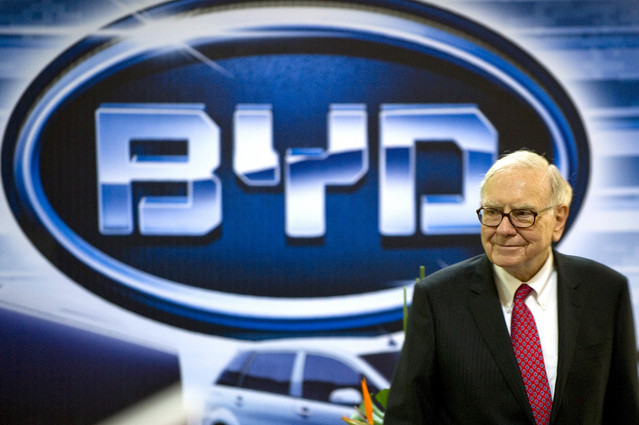
China Electric Car Sales Up 188%: Warren Buffett's BYD Dominates Lithium Race.


  "I would like to share today the great report from CleanTechnica on the lithium race in China. BYD backed by Warren Buffett is the solid leader in the largest market for electric cars in the world in China. BYD has become the largest manufacturer of EVs in the world in May of this year and now is breaking out of the rest of the New Energy EVs automakers with 4 of its electric cars among the 10 best-selling  EVs in China in July. Read more."


"Klip said Tesla’s Nevada Gigafactory is generating excitement among all stakeholders in the lithium sector. But he added that “the real story of the lithium race is happening in China right now.”
“China became the largest auto market in the world for electric cars last year and (Hong Kong-based) BYD Company is now the biggest manufacturer of electric cars in the world this year,” Klip said, adding that Warren Buffett is a stakeholder.
“In China, they call battery power The New Energy, and it’s part of their current five-year plan. Twenty-five companies are making 51 models of electric cars in China already. A whole new strategic industry is being created from scratch.  Ganfeng grew from $3 million dollars in sales in 2000 to $4.5 billion in market cap now.
“Security of lithium supply becomes the most important factor for the leaders to keep their dominant position in the fast-changing marketplace."


Lithium Market Small But Complex. Canadian Junior And Chinese Partner Taking Long View.


China's New Energy Plan: Joe Lowry's Food For Thought - Lithium Hydroxide Cash Cost Comparison.


Bloomberg:

Volvo Veteran-Led China Electric-Car Maker WM Raises $1 Billion


  • WM Motor joins Chinese startups seeking to challenge Tesla
  • Ex-Geely executive targets 2018 introduction for first model

    A former top executive behind China’s biggest acquisition of an overseas carmaker is setting out to make history twice, raising $1 billion in an initial fundraising round as the latest homegrown electric vehicle startup to challenge Tesla Motors Inc.
    Freeman Shen left Volvo Cars owner Zhejiang Geely Holding Group Co. in 2014 and last year founded WM Motor, which he says has secured funding from both domestic and overseas investors. WM plans to introduce its first model in 2018 and boost production to more than 100,000 units annually within the following three years, he said Tuesday.
    “We have profound experience in the industry, which distinguishes us from other startup companies, even Tesla,” Shen, who’s worked in the auto industry for 22 years, said in an interview in Shanghai. “We don’t want to make toy-like luxury cars for the minority. We will target the mass market.”
    The sum WM said it’s raised is a show of confidence in a startup competing with more than 200 Chinese electric-vehicle companies, some backed by the likes of Alibaba Group Holding Ltd.’s Jack Ma, Foxconn Technology Group’s Terry Gou and Tencent Holdings Ltd.’s Ma Huateng. Both traditional automakers and the bevy of startups see potential in the government’s commitment to boost yearly sales of new-energy vehicles -- its term for plug-in hybrid and fully-electric cars -- by 10-fold in the next decade.

    Born Unicorn

    Startups rarely reach the so-called unicorn status of a $1 billion valuation in initial funding rounds. Zhejiang Ant Small & Micro Financial Services Group Co., known as Ant Financial and controlled by Alibaba’s billionaire chairman Ma, raised funds at about a $40 billion valuation in June 2015. Tesla started with just $7.5 million in April 2004.
    To reduce dependence on oil imports and curtail pollution, the Chinese government is promoting what it considers a strategic industry by subsidizing both companies and consumers. It’s seeking 3 million new-energy vehicle sales a year by 2025, from 330,000 in 2015, when the country surpassed the U.S. to become the world’s biggest electric-car market.

    Global Champion

    WM was named after the German word weltmeister, which means global champion. Its management team has extensive experience in China’s auto industry, ranging from product development, parts procurement, production and sales, according to Shen.
    The company joins a frenzy of upstarts seeking to speed up investment in China’s electric-car sector. Chehejia, founded by Internet entrepreneur Li Xiang, said on Aug. 10 it began constructing an assembly plant with eventual capacity to make 300,000 vehicles a year. Just hours later LeEco, backed by billionaire Jia Yueting, announced plans to invest as much as 20 billion yuan ($3 billion) in a vehicle plant in eastern China and an auto theme park.
    WM is developing cars using two platforms and conducting road tests, Shen said. The company plans to apply for a production license later this year and set up a factory in eastern China, he said, declining to give more detail.
    Shen attended Harvard Business School’s Advanced Management Program while working for Geely, which bought Volvo from Ford Motor Co. in 2010 in the largest overseas acquisition by a Chinese automaker. Shen previously spent more than a decade working at autoparts maker BorgWarner Inc. and Italian automaker Fiat SpA.
    — With assistance by Tian Ying"

Warren Buffett's BYD Chasing Panasonic In Lithium Race: EV Lithium-Ion Battery Suppliers Outlook For H1 2016.


InsideEVs.


  Now we know who is feeding exactly this enormous growth of electric cars in China. InsideEVs provides very interesting data on the state of our lithium race for EVs lithium batteries market. Panasonic is still holding the number 1 place with 36% of the market, "but in terms of growth BYD is second to none moving up by more than 300%!" Now Warren Buffett's BYD claims 18% of this market. The first half of 2016 has seen an increase by 81% to nearly 8.5 GWh of lithium batteries capacity. As you can see, there is no Tesla yet on this chart at all! All lithium cells for Tesla are supplied by Panasonic. And there is no lithium under Gigafactory floor in Nevada. 
  Should we discuss the lithium demand picture again with 150 GWh of lithium batteries just coming from Tesla Gigafactory 1 by 2022 after initial 50 GWh in 2018? And what about another dozen of lithium batteries Megafactories all around the globe? 
  International Lithium strategic partner Ganfeng Lithium supplies Panasonic and BYD. Now this $4.5 billion giant from China finances International Lithium projects in Argentina and Ireland.


InsideEVs.


Lithium Market Small But Complex. Canadian Junior And Chinese Partner Taking Long View.


"Right now, Ganfeng is advancing ILC’s Mariana project in Salta province, Argentina. In July 2016, ILC and Ganfeng co-announced that a $12 million budget has been approved to accelerate exploration and development at Mariana.


ILC president Kirill Klip noted that Ganfeng has a $4.5 billion US market cap holding 19 patents for lithium products. Klip said the $12.5 million will enable ILC to firm up the size of the Mariana resource and move forward its application for a pilot production plant on the property.                                                     
“This access to capital and Ganfeng’s advanced lithium extraction technology puts  International Lithium in an exceptional position to move our project forward,” Klip said.  He cited recent discussions about ILC’s project with senior officials in the Argentinian government as evidence that the country is enthused about foreign investment in natural resource development. Read more."


InsideEVs:


"Here is a quick look at the progress for the lithium-ion battery market for electric cars,  which turns out to be growing faster than electric car market itself, as provided by some valuable data compiled by EV Sales Blog.
Today’s Li-ion battery sales (as defined by energy) grows faster than the EVs themselves because on top of the increasing plug-ins sales, battery pack capacity is going up.
As a result, the first half year total MWh of batteries produced has increased by about 81% – to nearly 8,500 MWh (8.5 GWh), while the plug-in market itself increased by about 50%.
All the top battery suppliers note an increase of sales. Panasonic remains the top player, with more than one-third of the market, but in terms of growth, BYD is second to none moving up by more than 300%.
Interestingly, Nissan’s AESC is back on the medal podium ahead of LG Chem, which is now gearing up for a strong run at 3rd in 2017 with the Chevrolet Bolt EVs (60 kWh), which arrives in Q4 for the United States.
  

Monday, 15 August 2016

Lithium Race Goes Ludicrous Mode: China Proposing California-Like Mandates For Electric Cars.


InsideEVs.


  China goes ludicrous mode in our lithium race now with these new initiatives for mandates to produce electric cars or purchase carbon credits from their peers. The results for The New Energy Cars from the previous long term state-level planning in China are very impressive already:


China Electric Car Sales Up 188%: Warren Buffett's BYD Dominates Lithium Race.


  I would like to share today the great report from CleanTechnica on the lithium race in China. BYD backed by Warren Buffett is the solid leader in the largest market for electric cars in the world in China. BYD has become the largest manufacturer of EVs in the world in May of this year and now is breaking out of the rest of the New Energy EVs automakers with 4 of its electric cars among the 10 best-selling  EVs in China in July.


"Klip said Tesla’s Nevada Gigafactory is generating excitement among all stakeholders in the lithium sector. But he added that “the real story of the lithium race is happening in China right now.”
“China became the largest auto market in the world for electric cars last year and (Hong Kong-based) BYD Company is now the biggest manufacturer of electric cars in the world this year,” Klip said, adding that Warren Buffett is a stakeholder.
“In China, they call battery power The New Energy, and it’s part of their current five-year plan. Twenty-five companies are making 51 models of electric cars in China already. A whole new strategic industry is being created from scratch.  Ganfeng grew from $3 million dollars in sales in 2000 to $4.5 billion in market cap now.
“Security of lithium supply becomes the most important factor for the leaders to keep their dominant position in the fast-changing marketplace."


Lithium Market Small But Complex. Canadian Junior And Chinese Partner Taking Long View.


China's New Energy Plan: Joe Lowry's Food For Thought - Lithium Hydroxide Cash Cost Comparison.


Bloomberg:


  • Carmakers would be required to build EVs or buy credits
  • Government planning to phase out subsidies after 2020

    China will consider mandates that carmakers produce more electric vehicles or purchase carbon credits from their peers, potentially emulating California’s system and transitioning from a subsidy-driven approach to catalyzing cleaner cars.
    The proposed rules will mandate that certain automakers produce or import new-energy vehicles in proportion to the number of fuel-burning autos they sell, according to a draft documentprepared by the National Development and Reform Commission. Companies that fail to achieve carbon dioxide emission reduction targets would be required to buy credits or pay fines of as much as five-times the average price of the credits, the country’s top industry regulator and policy maker said.
    China has encouraged consumers to switch from fossil-fuel burning vehicles to electric cars and plug-in hybrids, with the dual aim of reducing pollution and supporting companies in developing what it sees as the dominant auto technology of the future. The latest proposal was prepared after studying California’s zero-emission vehicle mandate, which has gone further than any other U.S. state to promote adoption of electric cars.
    “Without question, this will be good for the industry and will promote the development of all types of clean-energy vehicles,” Ye Shengji, deputy secretary general of the China Association of Automobile Manufacturers, said Friday at a press conference in Beijing.
    China surpassed the U.S. as the largest market for electric vehicles last year and wants sales new-energy vehicles to exceed 3 million units a year by 2025. To encourage production and sales of such vehicles, central and local governments have spent 15 billion yuan ($2.3 billion) on subsidies since 2009, according to state-run China Central Television. The government plans to phase out subsidies after 2020.
    “Given that some key automakers lack the motivation to develop new energy vehicles, there is concern that development in the industry will suffer once the fiscal policies are weakened or dropped,” the NDRC’s draft document said. The rules would be mandatory for automakers of a minimum size and voluntary for others, it said.
    — With assistance by Yan Zhang"